
Have you ever wondered what makes wild dogs so unique? Their behavior is fascinating and unlike any other animal you might know.
Understanding wild dog behavior can change the way you see these creatures forever. Whether you’re curious about their hunting style, social life, or how they communicate, this article will give you clear and simple insights. By the end, you’ll feel connected to their world in a way you never expected.
Keep reading to discover the secrets behind wild dog behavior that most people don’t know.
Wild Dog Social Structure
Wild dogs live in groups called packs. These packs have strong social bonds. Understanding their social structure helps us learn how they survive.
The pack works as a team. Each member has a role. This helps the pack hunt, protect, and raise pups.
Pack Hierarchy
The pack has a clear ranking system. The top dogs lead the group. Below them are other adults and pups. This order keeps peace in the pack.
- Alpha pair: The leaders of the pack
- Beta dogs: Second in command
- Subordinate adults: Support roles
- Pups: Youngest members learning skills
Roles Within The Pack
Each wild dog has a job. Some hunt, some guard, and others care for the young. These roles help the pack stay strong and safe.
| Role | Responsibility |
| Alpha Male | Leads hunts and defends territory |
| Alpha Female | Leads breeding and cares for pups |
| Hunters | Track and catch prey |
| Guardians | Protect the pack from threats |
| Babysitters | Watch and feed the pups |
Communication Methods
Wild dogs talk with sounds and body moves. These signals help keep the pack organized and safe.
Common communication forms include:
- Howling to call pack members
- Tail wagging to show mood
- Facial expressions to warn or calm
- Body posture to show rank or intent
Hunting Strategies
Wild dogs have smart hunting strategies to catch their prey. They work together and use speed and skill.
Their hunting methods help them survive in the wild. Understanding these helps us learn more about their behavior.
Cooperative Hunting
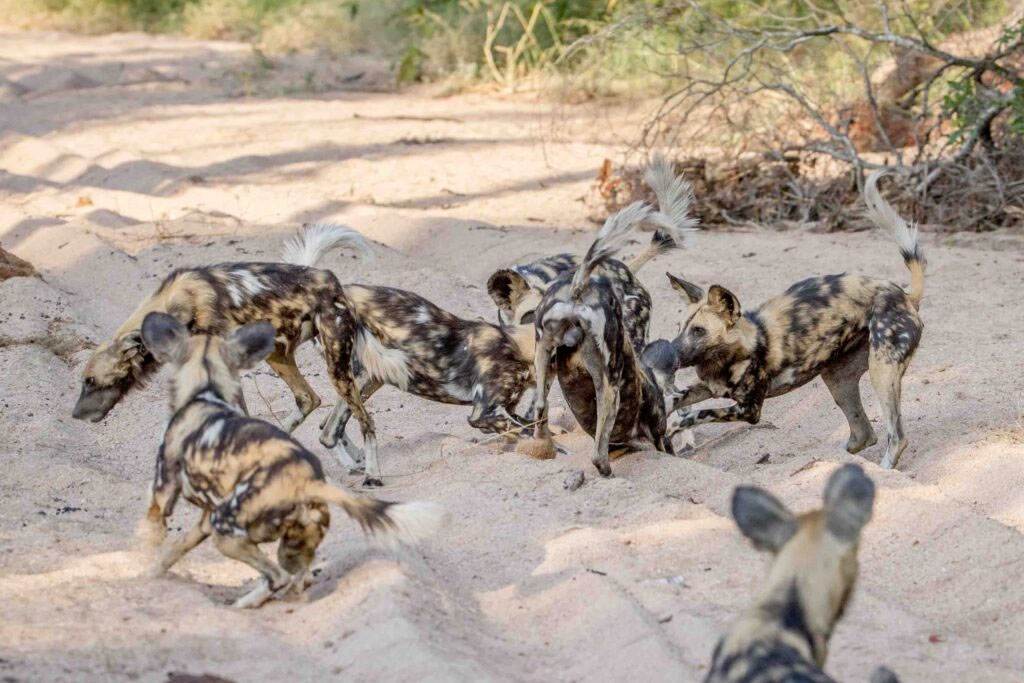
Wild dogs hunt in groups called packs. Each dog has a role during the hunt.
They communicate and coordinate to trap their prey. This teamwork makes hunting easier and more successful.
- Some dogs chase the prey to tire it out
- Others block escape routes
- They work quickly to catch prey before it escapes
Stalking And Chasing Techniques
Wild dogs use stalking to get close without being seen. They move quietly and slowly towards their target.
Once close, they start chasing with fast, long runs. Their speed and endurance help them catch prey over time.
- Stalk carefully to avoid alerting prey
- Chase in groups to surround the prey
- Use quick turns to keep up with agile animals
Prey Selection
Wild dogs choose prey that is easier to catch and provides enough food. They often select weak or young animals.
This choice helps the pack get enough energy without wasting too much effort or risking injury.
- Prefer animals like antelopes and small mammals
- Avoid very large or strong prey
- Focus on animals that are slow or isolated
Territorial Behavior
Wild dogs live in groups that control specific areas. These areas are called territories. They use the territory to find food and raise pups safely.
Territorial behavior helps wild dogs stay organized and protect their home from others. It keeps their family safe and strong.
Marking Territory
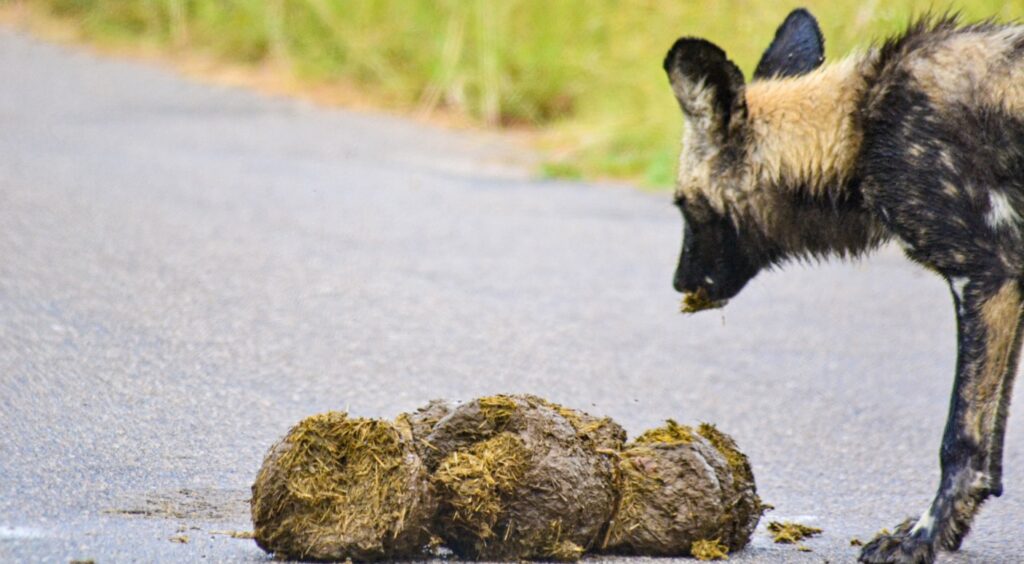
Wild dogs mark their territory to show others it is taken. They use scent marks from urine and feces. This sends a clear message to other animals.
Marking helps avoid fights by warning strangers to stay away. They often mark near trails or places they visit often.
Defending The Range
Wild dogs actively defend their territory from intruders. They work as a pack to chase away other wild dogs or predators. Fighting risks injury, so they try to scare intruders first.
They use loud barking and group movements to show strength. This behavior keeps their home safe and food sources secure.
Territory Size And Boundaries
Territory size varies based on food and pack size. Larger packs need bigger areas to hunt enough prey. Boundaries are often marked by natural landmarks like rivers or hills.
They respect boundaries of other packs to avoid conflict. When food is scarce, territories may overlap, causing tension between groups.

Credit: www.freepik.com
Reproductive Habits
Wild dogs have unique ways of reproducing that help their species survive. Their behaviors during mating and raising young are important for the pack.
These habits show strong teamwork and care within the pack. They work together to protect and support their pups.
Mating Rituals
Wild dogs use specific actions to find and attract mates. They show signs like scent marking and vocal calls to communicate readiness.
- Males and females scent mark to signal interest.
- They use body language like tail wagging and play bows.
- Pairs spend time close together before mating.
- Mating happens during certain seasons to improve pup survival.
Puppy Rearing
After pups are born, the pack focuses on their care. The mother stays near the den to nurse and protect them.
| Age of Pup | Milestone |
| 0-2 weeks | Eyes closed, fully dependent |
| 3-4 weeks | Start to open eyes, begin crawling |
| 5-8 weeks | Weaning begins, start eating meat |
| 9+ weeks | Play and learn hunting skills |
Pack Support In Raising Young
The whole pack helps raise the pups. Adults bring food and guard the den from threats.
- Hunters share food with mothers and pups.
- Non-breeding adults watch and protect pups.
- Older siblings teach younger ones social skills.
- Cooperation increases pup survival rates.
Adaptations For Survival
Wild dogs have many adaptations to survive in the wild. These changes help them find food, stay safe, and live in harsh places.
This article explains their physical traits, behaviors, and how they react to the environment.
Physical Traits
Wild dogs have strong legs to run fast and catch prey. Their sharp teeth help tear meat easily. Their fur color blends with nature to hide from enemies.
- Long legs for speed and endurance
- Sharp teeth for hunting and eating meat
- Camouflaged fur for protection
- Large ears to hear distant sounds
- Lean bodies to move quickly
Behavioral Adaptations
Wild dogs live and hunt in packs. This teamwork helps them catch bigger animals. They communicate using sounds, body language, and scent marks to work together.
- Hunt in groups for better success
- Use howls and barks to signal each other
- Care for sick or injured pack members
- Mark territory to avoid fights
Response To Environmental Changes
Wild dogs change their habits when weather or food supply changes. They move to new areas if needed. Their diet can include different animals depending on what is available.
| Environmental Change | Wild Dog Response |
| Dry season | Travel longer distances to find water |
| Cold weather | Stay in dens more to keep warm |
| Food shortage | Hunt smaller or different animals |
| Human presence | Become more active at night |
Credit: latestsightings.com
Interactions With Other Species
Wild dogs interact with many species in their habitats. These interactions can be competitive or beneficial.
Understanding these behaviors helps us learn more about their role in the ecosystem.
Competition With Predators
Wild dogs often face competition from other predators like lions and hyenas. This competition is mainly for food resources.
- Wild dogs hunt in packs for better success.
- Lions and hyenas may steal their prey.
- Competition can lead to conflicts and alter hunting patterns.
Symbiotic Relationships
In some cases, wild dogs form symbiotic relationships with other species. These relationships can benefit both parties involved.
Impact On Ecosystem
Wild dogs play an important role in maintaining the balance in their ecosystems. Their hunting activities control prey populations.
| Effect | Species |
| Population Control | Antelopes |
| Food Source | Scavengers |
| Habitat Balance | Various Species |
Human Impact On Wild Dogs
Wild dogs face many challenges because of humans. These impacts affect their survival and behavior.
Understanding these impacts helps us protect wild dogs. It also helps maintain healthy ecosystems.
Habitat Loss
Human activities destroy wild dog habitats. This makes it hard for them to find food and shelter.
Farming, logging, and urban growth take over wild lands. Wild dogs need large areas to hunt and live.
- Forests are cut down for timber
- Land is cleared for agriculture
- Cities expand into natural areas
Conflict And Conservation Efforts
Sometimes wild dogs and humans come into conflict. This often happens near farms or villages.
Efforts to conserve wild dogs involve protecting their habitats. This includes setting up wildlife reserves.
| Conservation Actions | Benefits |
| Wildlife corridors | Connect habitats |
| Anti-poaching measures | Protect animals |
| Community education | Reduce conflicts |
Role In Wildlife Management
Wild dogs are important in wildlife management. They help control the populations of prey animals.
Managing wild dog populations keeps ecosystems balanced. It also supports biodiversity.
Credit: hot1027.co.za
Frequently Asked Questions
What Are Common Wild Dog Social Behaviors?
Wild dogs live in packs with strong social bonds. They hunt, raise pups, and protect territory together. Communication involves vocalizations, body language, and scent marking.
How Do Wild Dogs Hunt And Catch Prey?
Wild dogs hunt cooperatively using speed and strategy. They chase prey over long distances, taking turns to tire it out. Pack coordination increases hunting success rates.
Why Do Wild Dogs Have Strong Pack Loyalty?
Pack loyalty ensures survival through teamwork and protection. Each member has roles like hunting or guarding pups. Loyalty maintains order and reduces conflicts within the group.
How Do Wild Dogs Communicate Within Packs?
Wild dogs use barks, whines, growls, and body postures. Tail wagging and facial expressions convey mood or warnings. Communication helps coordinate hunts and maintain social bonds.
Conclusion
Wild dogs live in close groups and show strong teamwork. They hunt together and share food with pack members. Their behavior helps them survive in the wild. Watching them teaches us about nature and cooperation. Understanding wild dogs can protect their homes and lives.
They play an important role in the ecosystem. Respecting their behavior keeps balance in nature. Wild dogs remind us how animals work as a team. Observing their actions gives us valuable lessons. Their social life is both complex and fascinating.

Emily Barker is the founder of ChillDogLife.com, a space dedicated to helping pup parents discover the best dog products, lifestyle tips, and cozy ideas for happier homes.
A lifelong dog lover, Emily combines her passion for pets with a knack for research to share trusted recommendations on everything from toys and furniture to health and everyday care.
Her goal is simple: to make life easier, stylish, and more joyful for dogs and the people who love them.




