
Is your dog whining nonstop in their crate? It can be frustrating and exhausting for both you and your furry friend.
But don’t worry—there are simple, effective ways to help your dog feel calm and comfortable in their crate. You’ll discover easy steps to stop the whining and turn crate time into a peaceful moment for your dog. Keep reading, and you’ll soon enjoy quiet, happy crate sessions that make life easier for both of you.

Credit: www.dogsavvylosangeles.com
Reasons Dogs Whine In Crate
Understanding why your dog whines in the crate is the first step toward stopping the behavior. Dogs use whining as a way to communicate discomfort, fear, or needs. Pinpointing the exact reason behind the whining helps you address the root cause effectively and create a calm, positive crate experience for your pet.
Separation Anxiety
Separation anxiety is a common reason dogs whine in their crate. Your dog might feel stressed or scared when left alone, especially if the crate feels like isolation. Have you noticed your dog pacing or trying to escape the crate? These signs often point to anxiety rather than physical discomfort.
To ease separation anxiety, try leaving familiar items like your worn t-shirt in the crate. Gradually increase the time your dog spends alone to build confidence. Patience and consistency can make a big difference.
Discomfort Or Pain
Whining can signal that your dog is uncomfortable or in pain. The crate might be too small, too hot, or too cold. Check if the bedding is soft enough and that there’s enough space for your dog to move comfortably.
Have you ruled out health issues? Sometimes whining is a sign of an injury or illness. If the whining is persistent and unusual, a vet visit is a smart move.
Need To Relieve
Dogs often whine when they need to go outside to relieve themselves. Puppies and older dogs may have less bladder control and might need more frequent breaks. If your dog whines shortly after being crated, this could be the reason.
Try to schedule regular bathroom breaks before and after crate time. Does your dog’s whining stop when you open the crate? This reaction can confirm the need to relieve.
Boredom Or Loneliness
A bored or lonely dog may whine to get your attention. Dogs are social animals that need mental and physical stimulation throughout the day. If crate time is long or not paired with exercise, whining is a way your dog expresses frustration.
Have you added toys or chews to the crate to keep your dog entertained? Rotating these items can keep your dog engaged and reduce whining. Sometimes a quick play session before crating makes all the difference.
Preparing The Crate
Choose a comfortable crate size that allows your dog to stand and turn easily. Place soft bedding and familiar toys inside to create a cozy space. Make the crate inviting by associating it with positive experiences.
Preparing the Crate Is your dog constantly whining in their crate? It might be time to rethink how you’ve prepared it. The crate should be a safe and inviting space, not just a box with bars. By making a few adjustments, you can transform it into a cozy den your dog loves. Let’s dive into some practical steps to enhance your dog’s crate experience.Choose The Right Size
The size of your dog’s crate is crucial. If it’s too small, your dog will feel cramped. Too large, and they might feel insecure. The ideal crate allows your dog to stand up, turn around, and lie down comfortably. When I got the right size for my dog, Max, his whining decreased significantly. Have you checked if your dog’s crate is the right fit for them?Make It Comfortable
Comfort is key. Add a soft bed or a cushioned mat at the bottom of the crate. This small change can make a world of difference. You wouldn’t want to sleep on a hard surface, would you? Neither does your dog. A comfortable crate becomes a place of rest rather than a source of stress.Add Familiar Scents
Dogs have an incredible sense of smell. Adding a piece of your clothing or a familiar blanket can make the crate feel more like home. The familiar scent can have a calming effect on your dog. When Max was a puppy, placing an old t-shirt of mine in his crate worked wonders. What scents can you introduce to make your dog’s crate more welcoming? By focusing on these elements, you can help your dog feel more at ease in their crate, reducing the tendency to whine. Remember, a well-prepared crate is a happy place for your furry friend.Training Techniques
Training techniques play a key role in helping your dog feel comfortable and quiet in their crate. These approaches focus on building trust, creating positive experiences, and setting clear expectations. The goal is to make the crate a safe space, not a place of anxiety or discomfort.
Gradual Crate Introduction
Start by allowing your dog to explore the crate on their own terms. Leave the door open and place treats or toys inside to encourage curiosity. Don’t rush closing the door; instead, close it for short periods while you stay nearby, gradually increasing the time your dog spends inside.
This slow approach reduces fear and prevents overwhelming your dog. Have you noticed how your dog reacts when left alone suddenly? Gradual exposure can change that reaction from stress to calmness.
Positive Reinforcement
Reward your dog every time they enter the crate calmly or remain quiet inside. Use treats, praise, or a favorite toy as immediate rewards. This teaches your dog that good things happen when they behave calmly in the crate.
Try to catch your dog being quiet instead of waiting until they whine. This shift can make a big difference in behavior. Have you tried rewarding silence instead of reacting to whining?
Establishing A Routine
Consistency helps your dog know what to expect. Set regular times for crate use, such as during meals, naps, or bedtime. A predictable schedule reduces anxiety because your dog understands when crate time happens and when it ends.
Dogs thrive on routine. If your dog whines more at certain times, think about adjusting your schedule or adding calming activities before crate time. Have you noticed if your dog’s whining follows a pattern?

Credit: zigzag.dog
Managing Whining Behavior
Managing whining behavior in a crate helps your dog feel calm and secure. It reduces stress for both you and your pet. Consistent actions teach your dog what is acceptable. Patience and understanding improve the training process. The goal is to encourage quiet and relaxed moments.
Ignoring Attention-seeking Whines
Dogs often whine to get attention. Responding to every whine can make it worse. Ignore your dog when it whines for no reason. Avoid eye contact or talking. Wait for your dog to be quiet before giving attention. This shows that quiet behavior brings rewards, not whining.
Rewarding Quiet Moments
Catch your dog being calm and quiet in the crate. Use treats or gentle praise to reward this behavior. Timing is important. Give rewards immediately when your dog stops whining. This helps your dog connect quiet time with positive outcomes. Gradually increase the time your dog stays quiet before rewarding.
Using Commands To Encourage Calm
Teach your dog simple commands like “quiet” or “stay.” Use these words during calm crate time. Reward your dog when it follows the command. Keep training sessions short and positive. Over time, your dog will learn to stay calm on command. This builds trust and good habits.
Additional Tips For Success
Helping a dog stop whining in the crate takes patience and smart strategies. Some extra tips can make this process easier for both you and your pet. These tips focus on preparing your dog before crate time, knowing when to limit crate use, and checking health factors that might cause discomfort.
Exercise Before Crate Time
Exercise helps your dog use up energy. A tired dog tends to relax and stay quiet. Take your dog for a walk or play fetch before crate time. This reduces restlessness and the need to whine.
Avoiding Overuse Of Crate
The crate should not feel like a prison. Limit crate time to avoid stress and boredom. Give your dog plenty of time outside the crate to move and play. This balance keeps your dog happy and calm.
Monitoring Health Issues
Whining can mean discomfort or pain. Watch for signs like limping, coughing, or changes in appetite. Regular vet visits help catch health problems early. A healthy dog will feel better inside the crate.
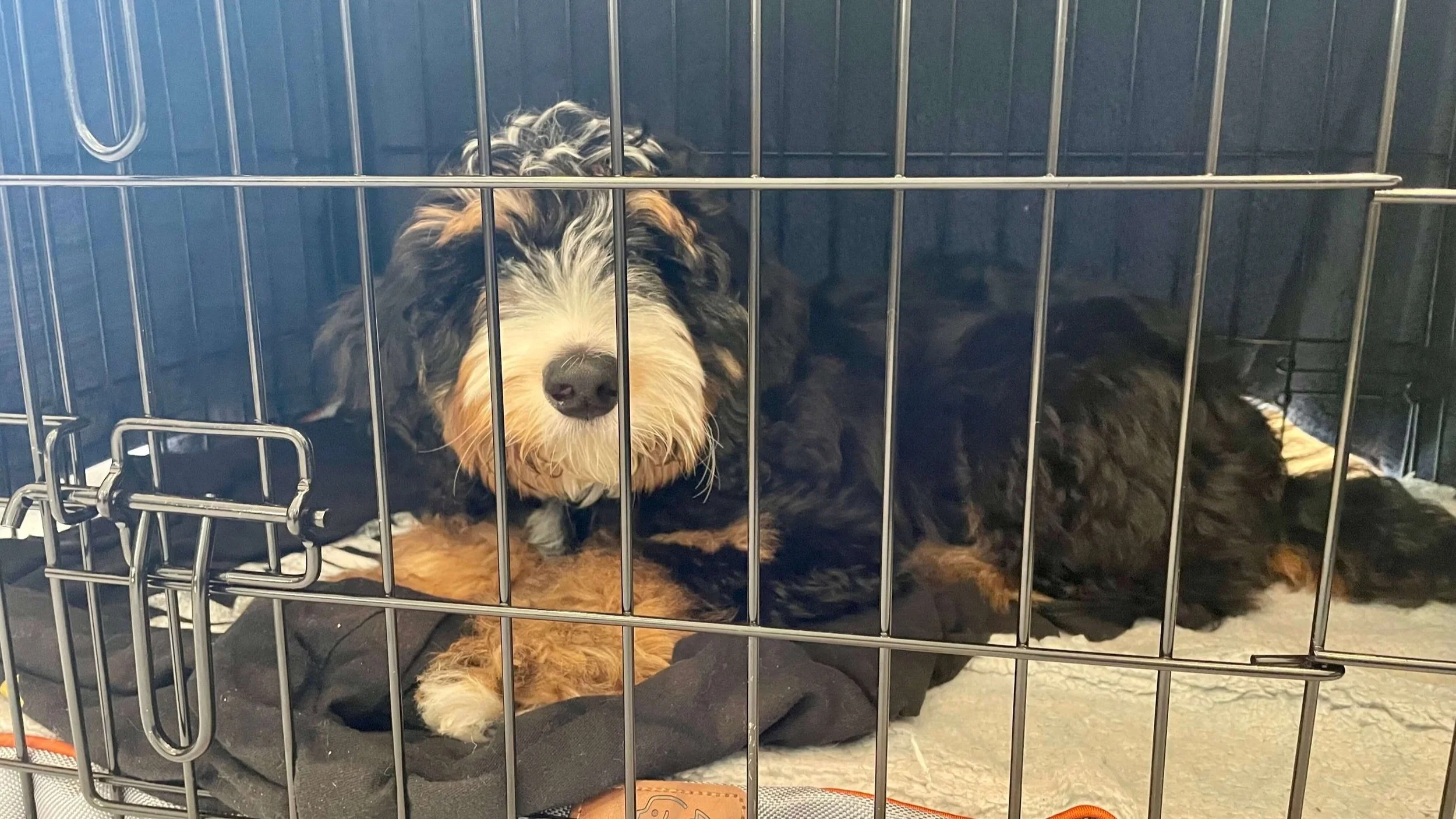
Credit: www.dogsavvylosangeles.com
Frequently Asked Questions
How Can I Stop My Dog Whining In The Crate?
Provide comfort, exercise, and gradual crate training. Use treats and praise to create positive associations. Avoid giving attention during whining to prevent reinforcement.
Why Does My Dog Whine In The Crate At Night?
Dogs often whine due to anxiety, loneliness, or needing a bathroom break. Ensure your dog is tired, comfortable, and has had a bathroom break before bedtime.
Is Crate Whining A Sign Of Separation Anxiety?
Yes, persistent whining may indicate separation anxiety. Gradual desensitization and positive reinforcement help reduce stress. Consult a vet or trainer if whining persists.
How Long Should A Dog Stay In A Crate Without Whining?
Limit crate time to 2-4 hours for adult dogs. Puppies need shorter periods. Frequent breaks and exercise reduce whining and stress.
Conclusion
Stopping your dog’s crate whining takes patience and consistency. Give your dog time to adjust and feel safe inside. Use treats and praise to encourage quiet behavior. Avoid giving attention when your dog whines. Create a calm and comfortable space in the crate.
Over time, your dog will learn to enjoy their crate. Keep practicing these steps every day. Soon, whining will become a thing of the past. Your dog will feel happy and secure in their crate.

Emily Barker is the founder of ChillDogLife.com, a space dedicated to helping pup parents discover the best dog products, lifestyle tips, and cozy ideas for happier homes.
A lifelong dog lover, Emily combines her passion for pets with a knack for research to share trusted recommendations on everything from toys and furniture to health and everyday care.
Her goal is simple: to make life easier, stylish, and more joyful for dogs and the people who love them.




