
If you have a female dog, you’ve probably noticed changes in her behavior at certain times. Understanding female dog heat behavior is key to keeping her comfortable and your home calm.
You might wonder why she acts restless, why she licks herself more, or why male dogs suddenly seem obsessed with her. This article will help you recognize these changes and give you simple tips to handle them with ease. Keep reading to learn what to expect and how to support your furry friend during her heat cycle.

Credit: www.seeworldgps.com
Signs Of Heat In Female Dogs
Female dogs go through heat cycles that bring physical and behavioral changes. Knowing these signs helps you care for your dog better during this time.
Heat cycles happen regularly and last for a few weeks. Each dog shows different signs, but some are common to most females in heat.
Physical Changes To Watch
One of the first signs of heat is swelling of the vulva. You may also notice a bloody discharge that changes color and amount over time.
- Swollen vulva
- Bloody or pink discharge
- Increased urination
- More licking of the genital area
- Possible loss of appetite
Behavioral Shifts During Heat
Female dogs often act differently during heat. They may seem restless or more affectionate. Some may try to escape or seek male dogs.
- Increased licking of the genital area
- More attention-seeking and cuddling
- Restlessness or pacing
- Raising the tail and standing differently
- Marking territory with urine
Duration And Frequency Of Heat Cycles
Heat cycles usually last about three weeks. Most female dogs have two cycles per year, but this can vary.
| Phase | Duration | Notes |
| Proestrus | 7-10 days | Swelling and discharge start |
| Estrus | 5-9 days | Female is fertile and receptive |
| Diestrus | 10-140 days | Heat signs end, body returns to normal |
| Anestrus | 90-150 days | Resting phase before next cycle |
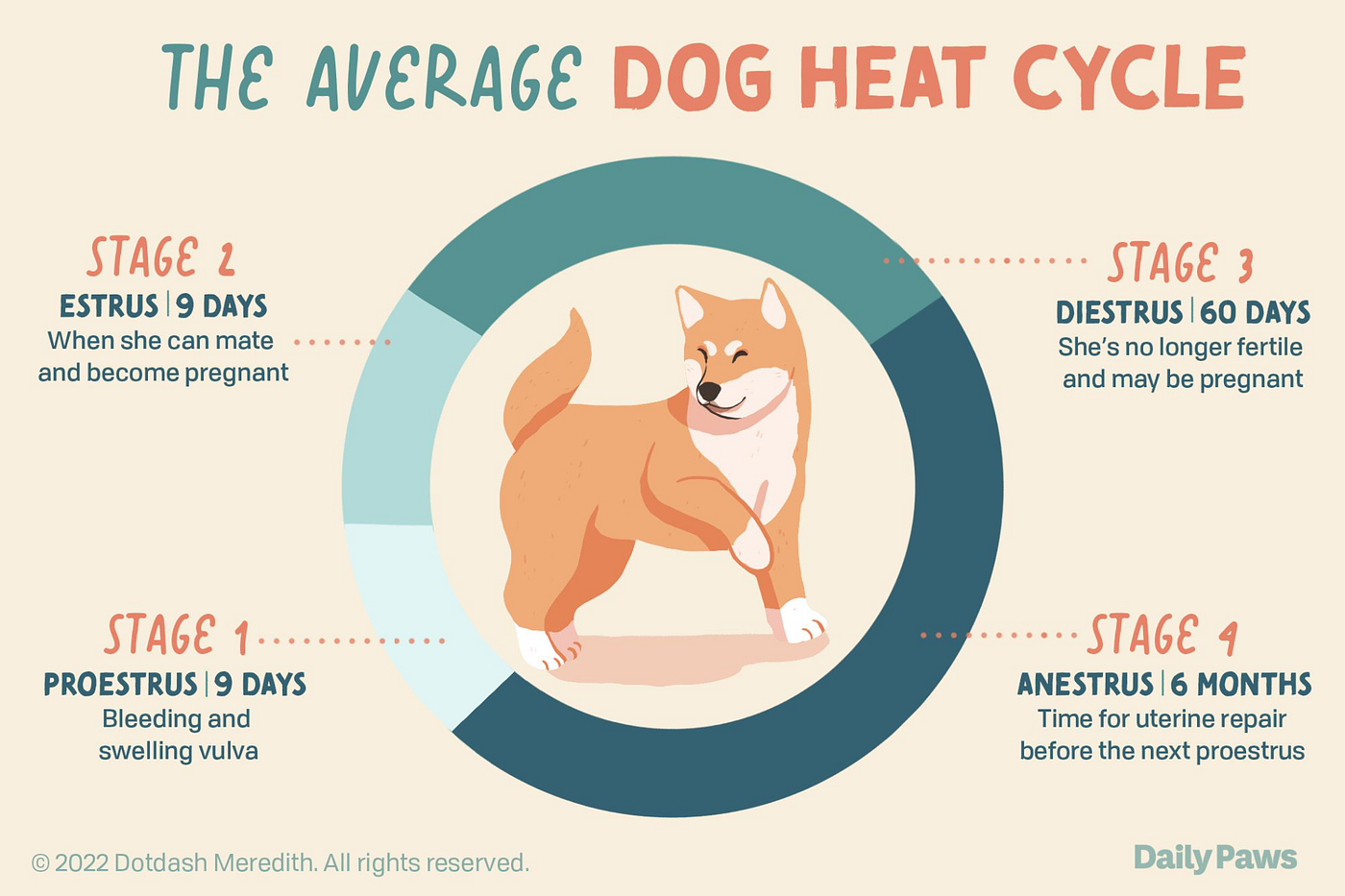
Credit: medium.com
Common Heat Stage Symptoms
Female dogs show different behaviors during their heat cycle. These changes happen in stages. Each stage has its own signs and symptoms.
Knowing these signs helps dog owners care for their pets better during heat.
Proestrus Phase Traits
The proestrus phase lasts about 7 to 10 days. The female dog’s body prepares for mating in this phase.
- Swelling of the vulva
- Bloody discharge
- Increased urination
- Restlessness and nervousness
- Attraction of male dogs, but no acceptance yet
Estrus Phase Characteristics
Estrus is the phase when the female accepts the male. It lasts about 5 to 9 days.
| Symptom | Description |
| Vulva size | Swelling decreases slightly from proestrus |
| Discharge | Color changes from red to pink or straw-colored |
| Behavior | Female shows signs of wanting to mate |
| Receptiveness | Female allows male to mount |
Diestrus And Anestrus Phases
Diestrus follows estrus and lasts about 60 to 90 days. The female stops accepting males during this time.
Anestrus is the resting phase between heat cycles. It can last several months.
- Diestrus: Vulva returns to normal size
- Diestrus: Discharge stops
- Anestrus: No signs of heat
- Anestrus: Female’s body recovers and prepares for next cycle
Managing Your Dog’s Comfort
Female dogs go through heat cycles that can last several weeks. During this time, they may act differently and need special care.
Keeping your dog comfortable helps reduce stress and keeps her safe. You can do this by managing hygiene, mood changes, and outdoor activities.
Hygiene And Cleanliness Tips
During heat, female dogs may have discharge that can make your home messy. Cleanliness is important for her health and comfort.
Use dog diapers or heat pads to protect furniture and floors. Change these frequently to prevent infections.
- Clean your dog’s bedding often
- Wipe her gently with a damp cloth if needed
- Keep her living area dry and clean
- Wash your hands after handling her
Handling Mood Swings
Your dog may be more sensitive or restless during heat. She can show mood swings like being clingy or grumpy.
Give her extra attention but respect her space if she wants to be alone. Stay calm and patient with her behavior changes.
- Offer quiet time in a cozy spot
- Use soft, gentle tones when talking
- Avoid loud noises or sudden movements
- Provide familiar toys for comfort
Safe Outdoor Activities
Exercise is important but your dog needs extra care outside during heat. She may attract male dogs or feel tired faster.
Keep her on a leash and avoid places with many dogs. Short, calm walks help her stay active without stress.
- Choose quiet walking paths
- Use a secure leash and collar
- Watch for signs of fatigue or discomfort
- Bring water to keep her hydrated
Preventing Unwanted Pregnancy
Female dogs in heat show behaviors that attract males. This can lead to unwanted pregnancy if not managed. Careful steps help keep your dog safe and prevent accidental litters.
Understanding how to supervise and contain your dog, use protective garments, and be aware of timing is key. These methods reduce risks and make heat periods easier to handle.
Supervision And Containment
Keep your female dog under close watch during her heat. Never let her roam outside alone. Males can sense her and may try to reach her quickly.
- Use a secure, fenced yard to prevent escape
- Walk your dog on a leash at all times
- Keep male dogs away from your female during heat
- Limit visitors who have intact male dogs
Use Of Protective Garments
Protective garments help stop your dog from leaving scent trails. They also prevent males from mounting. These clothes are designed for comfort and safety.
| Type of Garment | Purpose | Notes |
| Dog Diapers | Cover discharge and scent | Change often to keep clean |
| Heat Pants | Prevent mounting by males | Use soft, breathable materials |
| Protective Vests | Cover body and block scent | Best for active dogs |
Timing And Breeding Awareness
Know the heat cycle stages and fertile days of your dog. Avoid contact with males especially during fertile days. This knowledge helps prevent accidental breeding.
- Track the start and end of the heat cycle
- Identify days when your dog is most fertile
- Keep male dogs away during these days
- Consult a vet for advice on heat timing
When To Consult A Vet
A female dog’s heat cycle can show many normal behaviors. Sometimes, unusual signs mean problems. It is important to know when to see a vet.
This guide helps you understand signs that need medical attention. Early care keeps your dog safe and healthy during her heat cycle.
Signs Of Heat Cycle Complications
Watch for these symptoms that may mean trouble during your dog’s heat cycle. They need a vet’s checkup quickly.
- Heavy bleeding lasting more than three weeks
- Swelling that gets worse or does not go down
- Foul smell coming from the genital area
- Excessive licking or signs of pain
- Loss of appetite or unusual tiredness
- Fever or vomiting
Health Risks During Heat
Heat cycles can cause serious health risks. Know these risks to protect your dog’s wellbeing.
| Health Risk | Symptoms | Need for Vet |
| Pyometra (uterine infection) | Fever, pus discharge, lethargy | Urgent |
| Excessive bleeding | Soaking bedding, weakness | Immediate |
| Behavioral stress | Restlessness, aggression | Consultation |
| Infections | Swelling, redness, pain | Prompt |
Veterinary Care Options
Your vet can offer treatments and advice. Here are common care options available during a heat cycle.
- Physical exam to check for infections or injuries
- Medications to reduce pain or infection
- Advice on managing bleeding and hygiene
- Spaying recommendation to prevent future heat cycles
- Emergency care if complications arise
Credit: wopet.com
Long-term Care And Spaying
Understanding your female dog's heat behavior is important. Long-term care includes considering spaying. Spaying has many benefits for your pet.
Spaying can affect your dog’s behavior. It is a crucial decision that impacts her health and well-being.
Benefits Of Spaying
Spaying offers several health benefits for female dogs. It helps in preventing certain diseases and conditions.
- Reduces risk of uterine infections
- Prevents breast tumors
- Eliminates heat cycles
Post-spaying Behavior Changes
After spaying, some dogs may show changes in behavior. These changes are usually positive and improve the dog’s quality of life.
Some dogs become calmer and less aggressive. They may also be less likely to roam.
Spaying Timing And Considerations
The timing of spaying is important. It is usually recommended before the first heat cycle.
| Age | Considerations |
| 6-9 months | Ideal time for spaying |
| After first heat | Consult with a vet |
| Older age | Check for health issues |
Frequently Asked Questions
What Are Common Signs Of Female Dog Heat Behavior?
Female dogs show swelling of the vulva, increased urination, and bleeding. They may also act restless or more affectionate. These signs usually last 2-3 weeks during the heat cycle.
How Often Do Female Dogs Go Into Heat?
Most female dogs go into heat twice a year, roughly every six months. Smaller breeds may cycle more frequently, while larger breeds might have fewer cycles annually.
Can Female Dog Heat Behavior Affect Their Mood?
Yes, female dogs can become anxious, irritable, or clingy during heat. Hormonal changes influence their mood, causing behavior shifts that usually normalize after the cycle ends.
How Long Does Female Dog Heat Behavior Last?
Heat behavior in female dogs typically lasts 2 to 3 weeks. The entire estrous cycle may last up to 4 weeks before normal behavior returns.
Conclusion
Understanding female dog heat behavior helps you care better for your pet. Expect changes in mood, appetite, and activity during heat. Watch for signs like restlessness and frequent urination. Keep your dog safe and comfortable during this time. Patience and attention make the process easier for both of you.
Remember, this phase is natural and will pass soon. Stay calm and supportive to help your dog feel secure. Caring well now builds trust and strengthens your bond.

Emily Barker is the founder of ChillDogLife.com, a space dedicated to helping pup parents discover the best dog products, lifestyle tips, and cozy ideas for happier homes.
A lifelong dog lover, Emily combines her passion for pets with a knack for research to share trusted recommendations on everything from toys and furniture to health and everyday care.
Her goal is simple: to make life easier, stylish, and more joyful for dogs and the people who love them.




