If your dog has just experienced a seizure, you might be feeling worried and unsure about what comes next. Understanding your dog’s behavior after a seizure can help you provide the care and comfort they need.
You may notice changes that seem confusing or even scary, but knowing what to expect can ease your mind and help you act with confidence. You’ll discover the common signs of post-seizure behavior and learn how to support your furry friend during this critical time.
Keep reading to turn uncertainty into reassurance for both you and your dog.

Credit: www.petscare.com
Signs After A Seizure
After a seizure, dogs often show several behaviors. These signs help owners understand their pet’s condition.
Recognizing these signs is important to provide care and comfort to your dog.
Common Behaviors To Watch
Dogs may act confused or tired after a seizure. They might also be restless or pace around.
- Disorientation or confusion
- Restlessness or pacing
- Walking in circles
- Seeking comfort from owners
- Temporary blindness or unsteady walking
Physical Symptoms
Physical signs can vary. Some dogs may have muscle weakness or drooling after a seizure.
| Symptom | Description |
| Muscle Weakness | Difficulty standing or walking |
| Drooling | Excess saliva production |
| Shaking | Tremors or body shivers |
| Fatigue | Long periods of rest or sleep |
| Loss of Bowel Control | Involuntary urination or defecation |
Emotional Changes
Seizures can cause changes in your dog’s mood. They may feel scared or anxious.
Signs of emotional change include:
- Increased clinginess
- Fear or hiding
- Restlessness or pacing
- Unusual vocalizations like whining or barking
- Reduced interest in play or walks
Immediate Care Steps
Seeing your dog have a seizure can be very scary. Knowing what to do right after helps your dog stay safe and calm.
This guide covers important steps to take for your dog’s safety and comfort after a seizure ends.
Ensuring Safety
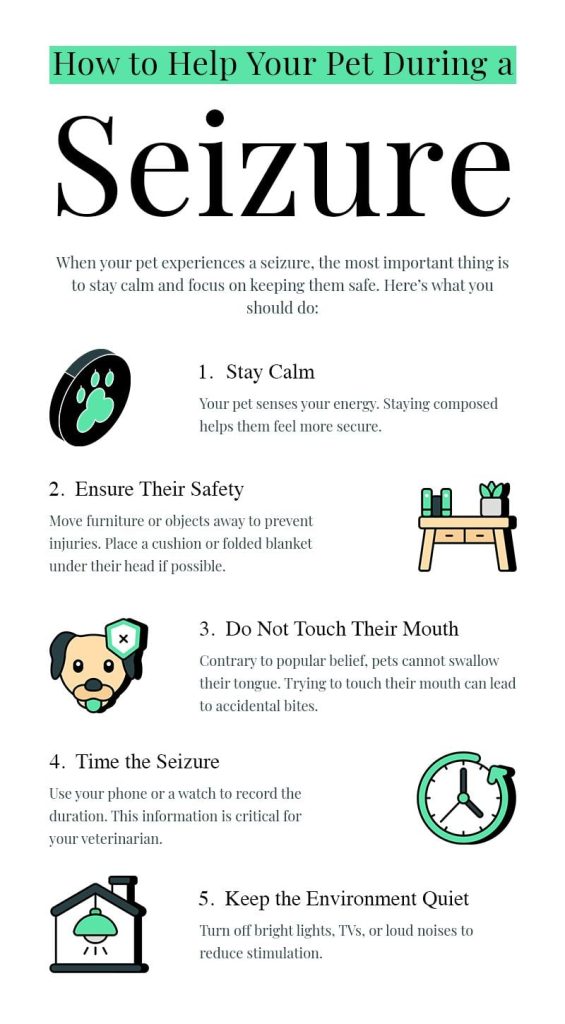
Keep your dog safe from harm during and after a seizure. Remove nearby objects that could hurt them.
- Clear the area of sharp or hard items.
- Do not try to hold your dog down.
- Keep other pets and people away.
- Place a soft blanket or pillow under their head.
- Do not put anything in your dog’s mouth.
Calming Your Dog
After a seizure, your dog may feel confused or scared. Speak softly and stay close to comfort them.
Tips to calm your dog:
- Use a gentle voice and slow movements.
- Offer a quiet and dim space.
- Avoid touching your dog too much at first.
- Stay calm yourself to help your dog relax.
When To Call The Vet
Some seizure signs need urgent vet care. Watch your dog closely and call the vet if needed.
| Situation | Action |
|---|---|
| Seizure lasts more than 5 minutes | Call the vet immediately |
| Seizures happen back to back | Seek emergency care |
| Dog does not wake up after seizure | Contact vet right away |
| Dog shows difficulty breathing | Get emergency help |
| Seizure is the first one ever | Schedule a vet visit soon |
Creating A Recovery Space
After a seizure, dogs need a quiet and safe place to rest. This helps them heal and feel secure.
Setting up a good recovery space can help reduce stress and support their recovery process.
Comfortable Environment
Choose a soft bed or blanket for your dog to lie on. A warm and cozy spot helps them relax.
Keep the area clean and free from sharp or hard objects that could hurt your dog.
- Use soft bedding like fleece or memory foam
- Keep the spot in a quiet room
- Make sure the area is easy to reach
Minimizing Stress
Stress can make your dog feel worse after a seizure. Keep noise and activity low near their space.
Avoid loud sounds, bright lights, and many visitors. Calm voices and gentle touch help soothe your dog.
- Turn off loud TVs and radios
- Limit visitors and keep the area quiet
- Speak softly and avoid sudden movements
Monitoring Activity Levels
After a seizure, your dog should rest but also move a little to avoid stiffness. Watch their activity closely.
Stop play or exercise if your dog seems tired or weak. Slow and gentle walks can help when they feel better.
- Check for signs of tiredness or weakness
- Limit playtime and avoid rough games
- Allow short, slow walks as they recover
Diet And Hydration Tips
After a seizure, a dog’s body needs good care. Diet and water help your dog recover well. Proper food and fluids keep your dog strong.
Watch what you feed and how much water your dog drinks. This helps avoid more seizures and supports healing.
Nutritional Support
Choose foods that are easy to digest and full of nutrients. Protein helps repair tissues. Healthy fats give energy.
- Include lean meats like chicken or turkey
- Add cooked vegetables such as carrots and green beans
- Use rice or sweet potatoes for carbohydrates
- Avoid foods with artificial additives or preservatives
- Feed small, frequent meals to reduce stomach upset
Encouraging Drinking
Water helps flush toxins and keeps your dog hydrated. Dogs may refuse water after a seizure. Try these tips to help:
| Tip | Description |
| Fresh Water | Change water often to keep it clean and tasty |
| Multiple Bowls | Place water bowls in different rooms |
| Flavor Water | Add a little low-sodium broth for taste |
| Use a Syringe | Gently give small amounts if your dog won’t drink |
Avoiding Triggers
Some foods and drinks may cause seizures. Keep a diary to find what affects your dog. Avoid these common triggers:
- Chocolate and caffeine
- Foods high in sugar or artificial sweeteners
- Excessive salt or fatty snacks
- Unfamiliar treats or table scraps
- Alcohol or foods with alcohol-based ingredients
Medication And Follow-up
Taking care of a dog after a seizure needs careful attention. Medication and regular check-ups help manage your dog’s health. Keeping track of their condition is very important for recovery.
This guide covers how to give medicine, watch seizure patterns, and schedule vet visits for your dog’s wellbeing.
Administering Prescriptions
Give your dog the prescribed medicine exactly as the vet says. Do not skip doses or stop early without advice. Some medications need to be given at the same time each day.
- Use a pill organizer to keep doses ready.
- Give medicine with food if recommended.
- Watch for side effects like tiredness or loss of appetite.
- Call the vet if your dog reacts badly.
Tracking Seizure Patterns
Keep a detailed record of each seizure. Note the time, length, and what your dog did. This helps the vet adjust treatment.
| Date | Time | Duration | Behavior | Notes |
| April 10, 2024 | 3:00 PM | 2 minutes | Shaking, drooling | Stopped after medication |
| April 15, 2024 | 11:30 AM | 1.5 minutes | Stiff legs, confusion | Owner stayed close |
| April 20, 2024 | 8:00 PM | 3 minutes | Falling down, jerking | Called vet next day |
Scheduling Vet Visits
Set regular vet visits to check your dog’s progress. Bring the seizure log to discuss any changes. The vet may change medicine or suggest tests.
- Plan follow-ups every 3 to 6 months.
- Take notes on questions before the visit.
- Report new symptoms immediately.
- Keep vaccination and health records updated.
)
Credit: www.reedycreekvet.com.au
Long-term Care Strategies
Caring for a dog after a seizure can be challenging. Long-term care is essential to help your furry friend live comfortably. Understanding their needs helps to manage their health and well-being.
Each dog is different, so care strategies may vary. It’s important to focus on exercise, mental health, and recognizing warning signs.
Exercise Adjustments
Dogs need exercise but post-seizure, their activity level might change. Monitor their energy and adjust routines accordingly.
Shorter, more frequent walks can help them stay active without overexertion. Keep an eye on their behavior during and after exercise.
- Observe for signs of fatigue
- Choose calm environments for walks
- Avoid strenuous activities
Mental Stimulation
Mental stimulation is crucial for a dog’s recovery. Engaging their mind can reduce stress and anxiety.
Puzzles and interactive toys are great options. They keep the dog’s mind active without physical strain.
- Use treat-dispensing toys
- Play simple games like hide and seek
- Teach new, gentle tricks
Recognizing Warning Signs
Knowing the warning signs of seizures can help in early intervention. Be attentive to changes in behavior or physical signs.
Keep a diary of seizure occurrences to identify patterns. This information is helpful for your vet.
- Watch for excessive drooling
- Look for unusual pacing or restlessness
- Note any sudden changes in mood
Support For Pet Owners
Caring for a dog after a seizure can be challenging. It’s normal to feel worried about your pet’s well-being. This guide offers practical advice to help you support your furry friend.
Understanding your dog's needs post-seizure is crucial. Let’s explore ways to manage stress, seek professional help, and connect with communities.
Managing Stress
Stress management is key for both you and your dog. Stay calm and create a safe environment for recovery.
- Keep the room quiet and dimly lit.
- Maintain a routine to provide comfort.
- Offer gentle petting and reassurance.
Seeking Professional Help
Consulting a vet is important for your dog’s health. They can provide guidance on treatments and medications.
Consider asking your vet these questions:
- What are the possible causes of the seizures?
- Are there specific treatments or diets recommended?
- How can we monitor future seizure activity?
Connecting With Communities
Joining a community can offer support and advice. Sharing experiences with others helps in managing your dog’s condition.
| Platform | Benefits |
| Online Forums | Share tips and stories |
| Local Groups | Meet like-minded pet owners |
| Social Media | Access real-time advice |
Credit: purrfectgrooming.pet
Frequently Asked Questions
What Are Common Dog Post Seizure Behaviors?
Dogs often appear confused, disoriented, and restless after a seizure. They may also be temporarily blind or seek comfort from their owner.
How Long Does Post Seizure Behavior Last In Dogs?
Post seizure behavior typically lasts from a few minutes up to 24 hours. Duration varies depending on seizure severity and individual dog.
Should I Comfort My Dog After A Seizure?
Yes, comforting your dog helps reduce anxiety and fear. Speak softly and offer gentle pets to reassure them.
Can Post Seizure Behavior Indicate A Serious Issue?
Persistent confusion or worsening symptoms post seizure may signal complications. Consult a vet if behaviors last unusually long or worsen.
Conclusion
Dogs often act differently after a seizure. They may seem tired, confused, or scared. This behavior usually improves with time and care. Watch your dog closely and offer comfort. Keep a quiet and safe space for them to recover. Understanding these changes helps you support your pet better.
Always talk to your vet for advice and treatment options. Caring for a dog post-seizure takes patience and love. Your calm presence makes a big difference in their healing.

Emily Barker is the founder of ChillDogLife.com, a space dedicated to helping pup parents discover the best dog products, lifestyle tips, and cozy ideas for happier homes.
A lifelong dog lover, Emily combines her passion for pets with a knack for research to share trusted recommendations on everything from toys and furniture to health and everyday care.
Her goal is simple: to make life easier, stylish, and more joyful for dogs and the people who love them.




