Have you ever wondered why your dog curls up in a tight ball or stretches out completely when they sleep? Understanding your dog’s sleeping behavior can tell you a lot about their health, comfort, and happiness.
When you know what’s normal and what’s not, you can help your furry friend rest better and feel safer. Keep reading to discover surprising facts about how dogs sleep and what their habits mean for you and your pet’s well-being.
Sleep Patterns In Dogs
Dogs spend a large part of their day sleeping. Sleep helps them stay healthy and active. Understanding their sleep patterns can help owners care for them better.
Different dogs may have different sleep habits. These depend on their age, breed, and lifestyle. Let’s explore how dogs sleep and what affects their rest.
Daily Sleep Duration
Most dogs sleep between 12 and 14 hours every day. Puppies and older dogs need even more rest. This extra sleep helps puppies grow and helps older dogs stay healthy.
- Adult dogs: 12 to 14 hours
- Puppies: up to 18 hours
- Senior dogs: 14 to 16 hours
Sleep Cycles Explained
Dogs have two main sleep stages: REM and non-REM. REM sleep is when dogs dream. Non-REM sleep is a deeper rest. Both stages are important for a dog’s health.
- Non-REM sleep: slow brain activity, deep rest
- REM sleep: active brain, dreaming occurs
- Short naps: help dogs stay alert during the day
Differences By Breed And Age
Different breeds and ages have unique sleep needs. Some breeds are more active and need less sleep. Others are calmer and sleep more. Age also changes sleep time and style.
| Breed Type | Typical Sleep Hours |
| Working breeds | 10 to 12 hours |
| Toy breeds | 14 to 16 hours |
| Large breeds | 12 to 14 hours |
| Puppies | 16 to 18 hours |
| Senior dogs | 14 to 16 hours |
Common Sleeping Positions
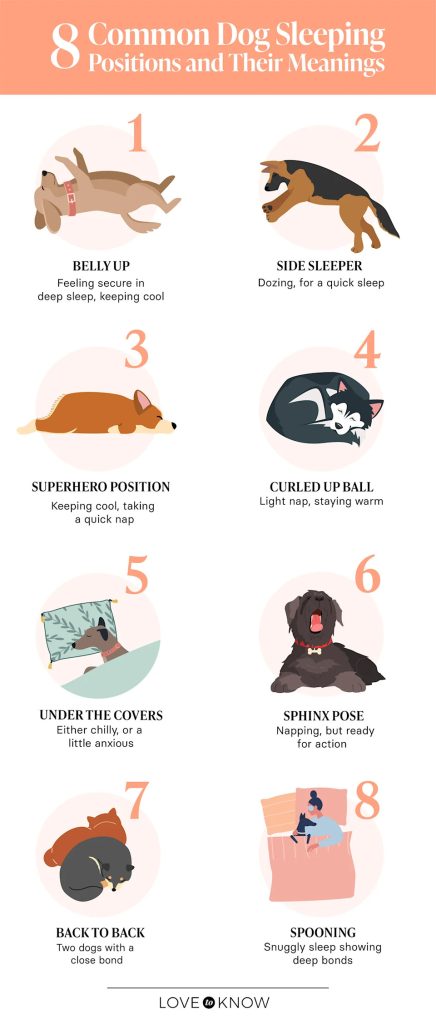
Dogs sleep in many different positions. Each position shows how relaxed or alert they feel. Understanding these positions helps you know your dog’s mood and comfort.
Some sleeping poses are very common and easy to spot. Let’s look at three popular positions dogs often choose to rest in.
Curled Up
When dogs curl up, they tuck their nose under their tail. This position keeps them warm and protects their vital organs. It is common in cold weather or when dogs feel a bit shy.
On Their Side
Sleeping on the side shows that dogs feel safe and relaxed. Their legs stretch out, and breathing is slow and steady. This pose is a sign of trust in their environment.
The Superhero Pose
This position gets its name because dogs lie flat on their belly with front legs stretched forward and back legs stretched backward. It helps them cool down and get ready to move quickly.
- Helps dogs stay alert
- Common in puppies and active dogs
- Shows energy and readiness
What Sleep Positions Reveal
Dogs sleep in many positions. Each one shows how they feel and their health.
Watching your dog’s sleep can help you understand them better.
Comfort Levels
Dogs change sleep positions to feel safe and cozy. Some positions show high comfort.
- The “curled-up” position keeps them warm and protects vital organs.
- The “side sleeper” shows they feel relaxed and safe.
- The “belly-up” position means trust and deep comfort.
- Sleeping with the head on paws is a light rest position.
Emotional State
Sleep positions tell you about your dog’s feelings. Some show stress, others calm.
| Position | Emotional Meaning |
| Curled-Up | Feeling safe but cautious |
| Side Sleeper | Calm and happy |
| Belly-Up | Trusting and relaxed |
| Head on Paws | Alert but resting |
| Tucked-In Legs | Feeling anxious or cold |
Health Indicators
Some sleep positions can hint if your dog feels pain or illness.
| Position | Possible Health Sign |
|---|---|
| Stretched Out Flat | Good health and no pain |
| Resting Head Low | Possible tiredness or discomfort |
| Constant Shifting | May feel pain or itch |
| Hunched or Tight Curl | Could show stomach pain or cold |

Credit: www.yahoo.com
Factors Affecting Dog Sleep
Dogs need good sleep to stay healthy and happy. Many things can change how well they sleep.
Understanding these factors helps owners give their pets better rest.
Environment And Noise
A dog’s sleep depends a lot on its surroundings. Loud noises can wake dogs up or make them restless.
Comfortable bedding and a quiet place help dogs sleep deeply and feel safe.
- Keep the sleeping area calm and quiet
- Use soft bedding for comfort
- Avoid sudden loud sounds near your dog
Diet And Exercise
What and when dogs eat affects their sleep. Heavy meals before bedtime can cause discomfort.
Regular exercise helps dogs use energy and rest better at night.
- Feed dogs several hours before sleep
- Provide balanced meals for good health
- Give daily exercise to tire them out
Stress And Anxiety
Stress makes it hard for dogs to relax and sleep well. Changes in their routine can cause anxiety.
Calm and steady care helps dogs feel safe and sleep soundly.
- Keep a regular daily routine
- Provide a quiet, safe space to rest
- Offer comfort during stressful times
Signs Of Sleep Problems
Dogs need good sleep to stay healthy and happy. Sleep problems can cause health issues. Watch for signs that your dog is not sleeping well.
Spotting sleep problems early helps your dog get proper care. Learn the common signs to know when to act.
Excessive Sleeping
Dogs usually sleep 12 to 14 hours a day. Excessive sleeping can mean your dog is tired or sick. It may be a sign of illness or depression.
If your dog sleeps too much and seems weak, check with a vet. Sudden changes in sleep time are also a warning sign.
Restlessness
Restlessness means your dog can’t settle down to sleep. Your dog may toss and turn or wake often. This can show pain or anxiety.
Look for signs like pacing, whining, or frequent waking. These signs suggest your dog is not getting deep sleep.
- Pacing around the sleeping area
- Whining or barking at night
- Frequent changes in sleeping position
- Difficulty falling or staying asleep
Changes In Behavior
Changes in sleep often come with behavior changes. Your dog may become more irritable or less active. Watch for mood swings or confusion.
Behavior changes can mean your dog is not resting well. This can affect their overall health and quality of life.

Credit: www.yahoo.com
Improving Your Dog’s Sleep
Dogs need good sleep to stay healthy and happy. Improving their sleep helps them have more energy and better moods.
Learn how to make your dog’s sleeping environment cozy and calm. Simple changes can lead to better rest for your furry friend.
Creating A Cozy Space
A comfortable sleep area is important for your dog’s rest. Make sure their bed is soft and in a quiet spot.
- Choose a soft, supportive bed
- Place the bed in a quiet area
- Keep the room at a comfortable temperature
Establishing A Routine
Dogs thrive with routines. A regular schedule helps them know when it’s time to rest.
| Activity | Time |
| Morning Walk | 7:00 AM |
| Feeding | 8:00 AM |
| Playtime | 5:00 PM |
| Bedtime | 9:00 PM |
Using Calming Techniques
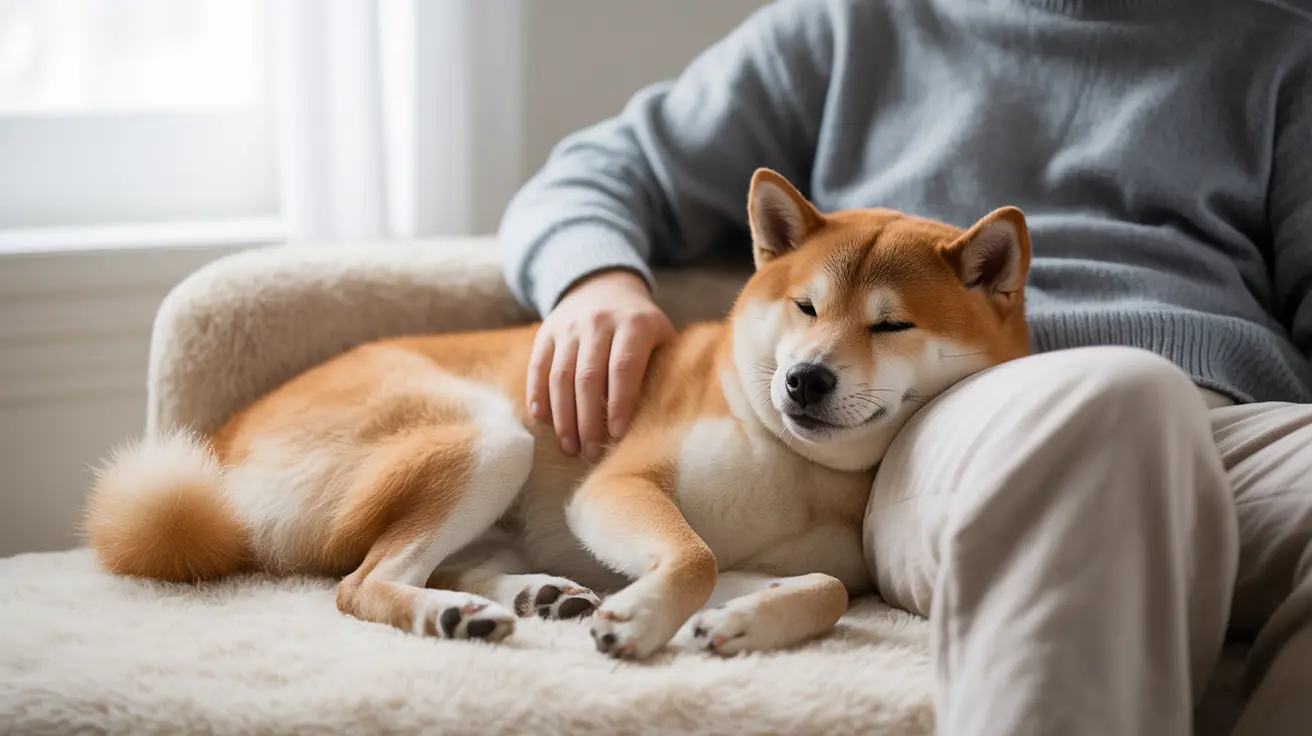
Calming techniques can help your dog relax. This is especially useful if they are anxious or restless.
Credit: www.petscare.com
Frequently Asked Questions
Why Do Dogs Twitch While Sleeping?
Dogs twitch during sleep due to muscle activity in the REM stage. This is when they dream and process memories. Twitching is normal and shows healthy brain function. It helps release energy and stress, indicating your dog is relaxed and comfortable in its sleep environment.
How Many Hours Do Dogs Sleep Daily?
Dogs typically sleep 12 to 14 hours a day. Puppies and older dogs may sleep even more. Their sleep patterns vary based on breed, age, and activity. Adequate sleep is essential for their health, growth, and overall well-being.
What Is Normal Dog Sleeping Behavior?
Normal dog sleeping behavior includes napping throughout the day and deep sleep at night. Dogs often change positions and may twitch or snore. They usually sleep in safe, cozy places. Consistent sleep patterns reflect good physical and emotional health.
Can Sleeping Position Reveal A Dog’s Mood?
Yes, a dog’s sleeping position can indicate its mood. Curled up dogs feel secure, while stretched out dogs are relaxed and confident. Belly-up positions show trust and comfort. Observing these signs helps understand your dog’s emotional state.
Conclusion
Understanding your dog’s sleeping behavior helps you care better. Dogs need rest to stay healthy and happy. Watch their sleep patterns to spot any changes. Quiet, deep sleep shows your dog feels safe. Active or restless sleep can mean stress or illness.
Give your dog a calm, comfy place to rest. Respect their sleep time as much as playtime. Happy dogs sleep well and enjoy life more. Keep learning about your dog’s habits every day. This knowledge builds a stronger bond between you both.

Emily Barker is the founder of ChillDogLife.com, a space dedicated to helping pup parents discover the best dog products, lifestyle tips, and cozy ideas for happier homes.
A lifelong dog lover, Emily combines her passion for pets with a knack for research to share trusted recommendations on everything from toys and furniture to health and everyday care.
Her goal is simple: to make life easier, stylish, and more joyful for dogs and the people who love them.




