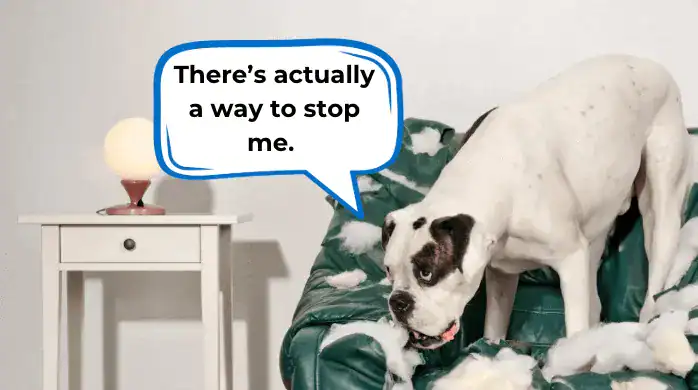
Is your dog chewing up your favorite shoes or scratching the furniture? Destructive behavior in dogs can be frustrating and stressful for you and your furry friend.
But here’s the good news: you can stop it. Understanding why your dog acts this way is the first step to finding a solution that works. You’ll discover simple, effective ways to calm your dog’s destructive habits and bring peace back to your home.
Keep reading, and you’ll learn how to turn chaos into calm—your dog will thank you for it.

Credit: www.amazon.com
Causes Of Destructive Behavior
Dogs may chew or dig when they feel upset or restless. Understanding why they act this way helps owners fix the problem. Some common reasons include boredom, anxiety, and natural growth stages.
Each cause needs a different approach. Learning what makes dogs destructive is the first step to stopping it.
Boredom And Lack Of Exercise
Dogs need daily play and walks to stay happy. Without enough exercise, they get bored and restless. This can lead to chewing furniture, digging holes, or other bad habits.
- Provide regular walks and playtime
- Use toys to keep them busy
- Give mental challenges like training games
- Make sure they have safe chew items
Separation Anxiety
Some dogs feel scared when left alone. They may bark, chew, or scratch doors to show stress. This anxiety happens because they miss their owner or feel unsafe.
Signs include pacing, drooling, or trying to escape. Helping dogs feel calm with toys or short separations can reduce this behavior.
Teething In Puppies
Puppies chew to ease pain from new teeth coming in. This natural stage can cause them to bite furniture or shoes. Giving proper chew toys helps them feel better and protects your things.
| Age (Months) | Teething Signs |
| 2-4 | Chewing everything, sore gums |
| 4-6 | Loose baby teeth, more chewing |
| 6-8 | Adult teeth coming in, less chewing |
Attention-seeking Habits
Dogs learn that bad behavior gets your attention. Chewing shoes or barking may make you look their way. They do not mind if the attention is negative.
To stop this, try these tips:
- Ignore bad behavior calmly
- Praise and reward good behavior
- Give attention regularly when your dog is calm
- Train simple commands to redirect focus
Credit: theonlinedogtrainer.com
Identifying Destructive Patterns
Destructive behavior in dogs can be challenging. It’s important to understand patterns to address them properly.
Recognizing these behaviors early helps in managing and correcting them effectively.
Common Signs To Watch For
Dogs often show signs of destructive behavior that are easy to spot. These signs can indicate underlying issues.
- Chewing furniture and shoes
- Excessive digging in the yard
- Scratching doors or walls
- Barking or howling excessively
Tracking Behavior Timing
Noting when destructive behaviors occur can reveal triggers. This helps in creating a better response plan.
| Behavior | Time of Day |
| Chewing | Afternoon |
| Digging | Morning |
| Scratching | Evening |
| Barking | Night |
Assessing Environmental Triggers
Environmental factors can influence a dog’s behavior. Identifying these can help in reducing destructive actions.
Preventive Strategies
Stopping destructive behavior in dogs starts with prevention. Dogs need proper care to stay calm and happy. You can use several strategies to avoid damage to your home.
Providing enough exercise and mental tasks helps dogs use their energy positively. Safe toys and a good space make a big difference too.
Providing Adequate Physical Activity
Dogs need daily exercise to release energy. Walks, runs, and playtime reduce boredom and stress. Without enough activity, dogs may chew or dig destructively.
- Take your dog for at least one 30-minute walk every day
- Play fetch or tug-of-war to keep them active
- Use dog parks for social play and running
- Provide safe outdoor space to explore
Mental Stimulation Techniques
Mental exercise tires dogs in a good way. It helps stop boredom and destructive habits. Training sessions and puzzle toys work well.
| Mental Activity | Description |
| Puzzle Toys | Hide treats inside to make dogs solve problems |
| Training | Teach commands or tricks to engage their mind |
| Scent Games | Hide objects and ask your dog to find them |
| Interactive Toys | Toys that move or make noise to catch attention |
Safe Chewing Alternatives
Dogs love to chew. Give them safe items to protect your furniture and shoes. Choose chew toys made for dogs and replace them often.
- Rubber chew toys that are durable and non-toxic
- Rawhide alternatives that are safe and digestible
- Frozen treats or ice cubes for teething puppies
- Natural bones approved by your vet
Creating A Dog-friendly Space
Make a space where your dog feels safe and relaxed. A cozy bed, toys, and water keep them comfortable. This helps reduce anxiety and bad habits.
- Choose a quiet corner for their bed
- Keep toys and chews nearby
- Provide fresh water at all times
- Use baby gates to limit access to certain rooms
- Keep harmful items out of reach
Training Methods To Curb Destruction
Destructive behavior in dogs can cause stress and damage at home. Using proper training methods helps stop these habits. Consistency and patience are key to success.
This guide covers three effective ways to reduce destruction. These include positive reinforcement, using commands, and redirecting behavior.
Positive Reinforcement Approaches
Positive reinforcement rewards good behavior. Dogs learn to repeat actions that bring treats or praise. This method builds trust and motivates dogs.
- Give treats when the dog avoids chewing on furniture.
- Praise your dog loudly for playing with toys.
- Use clicker training to mark good behavior.
- Be consistent with rewards after the right actions.
- Ignore unwanted behavior instead of punishing.
Using Commands Effectively
Clear commands help your dog understand what you want. Use simple words like “No,” “Leave it,” and “Sit.” Practice commands daily to build good habits.
| Command | Purpose | Example Use |
| No | Stop unwanted action | Say “No” when dog chews shoes |
| Leave it | Ignore an object | Use when dog tries to grab something |
| Sit | Calm and focus | Ask dog to sit before playing |
Redirecting Unwanted Behavior
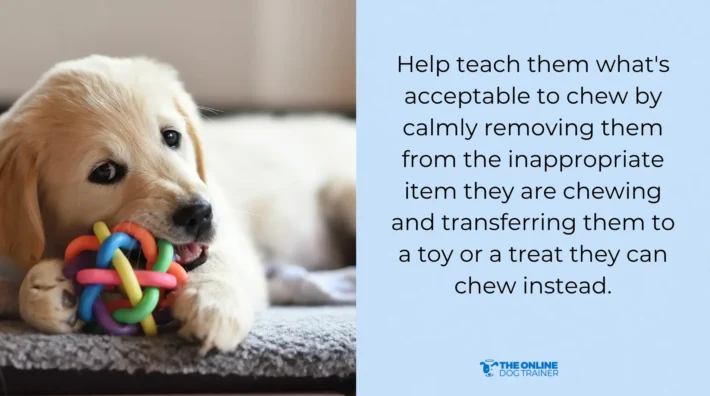
Redirecting means giving your dog a better option. If your dog chews on furniture, offer a chew toy instead. This helps break bad habits gently.
Try these redirection ideas:
- Replace shoes with durable chew toys.
- Take your dog outside for a walk to burn energy.
- Give puzzle toys to keep your dog busy.
- Use a crate for short times when unsupervised.
Managing Separation Anxiety
Separation anxiety causes dogs to act out when alone. This can lead to destructive behavior.
Helping your dog stay calm improves their well-being and your home’s safety.
Gradual Desensitization Steps
Start by leaving your dog alone for a few seconds. Then slowly increase the time away.
This helps your dog get used to being alone without feeling scared.
- Begin with very short departures
- Return before your dog gets anxious
- Repeat often, increasing time gradually
- Stay calm and quiet when leaving or arriving
Comfort Items And Tools
Comfort items make your dog feel safe when you are gone. These include toys and blankets.
Some tools help calm dogs, like calming sprays or background noise machines.
- Soft blankets with your scent
- Favorite chew toys or puzzles
- Calming pheromone sprays
- White noise or soft music machines
Professional Help Options
Sometimes, professional help is best for severe anxiety. Trainers and vets offer support.
They can provide behavior plans or medication if needed to help your dog cope.
- Certified dog trainers for behavior training
- Veterinarians for medical advice
- Animal behaviorists for tailored plans
- Support groups or classes for anxious dogs
When To Seek Veterinary Advice
Destructive behavior in dogs can be worrying. It may indicate deeper problems. Knowing when to get help is important.
Veterinarians can find causes and suggest treatments. Early advice can prevent worsening behavior.
Behavioral Disorders
Dogs may show destructive acts due to anxiety, fear, or boredom. Some behaviors signal stress or confusion.
- Excessive chewing or digging
- Repeated barking or howling
- Self-harm like licking or biting
- Sudden aggression or withdrawal
If these signs last more than a few days, consult a vet. They can assess if therapy or training is needed.
Medical Conditions Impacting Behavior
Health issues can cause or worsen bad habits. Pain, infections, or brain problems may change behavior.
| Condition | Possible Behavior Signs |
| Arthritis | Restlessness, irritability |
| Thyroid Problems | Hyperactivity, anxiety |
| Ear Infection | Head shaking, scratching |
| Neurological Disorders | Confusion, aggression |
A vet exam and tests can find these problems. Treating the illness often improves behavior.
Medication And Therapy Choices
Vets may suggest medicine or special therapy. These help calm your dog and reduce damage.
Common treatments include:
- Anti-anxiety medications
- Behavior modification programs
- Environmental enrichment
- Physical therapy
Follow your vet’s advice closely. Regular checkups track progress and adjust care.
Consistency And Patience In Training
Stopping destructive behavior in dogs takes time and steady effort. Consistency and patience help your dog learn what is right.
Training is not quick. You must keep working calmly and regularly. This builds good habits in your dog.
Setting Realistic Goals
Set small goals that your dog can reach. Big changes take many small steps. This keeps training clear and simple.
Expect some mistakes. Dogs learn slowly. Realistic goals help you avoid frustration and keep training positive.
Maintaining A Routine
Dogs feel safe with a regular schedule. Train at the same times each day. This helps your dog know what to expect.
A routine gives your dog less chance to act out. Consistent times for walks, play, and training improve behavior.
- Feed your dog at the same time daily
- Take walks at regular hours
- Practice training exercises every day
- Give rest and play breaks consistently
Celebrating Progress
Recognize small wins in your dog’s training. Praise helps your dog feel good and want to learn more.
Celebrate each step forward. This keeps you motivated and strengthens your dog’s positive habits.
- Give treats for good behavior
- Use kind words and petting
- Mark progress with a happy tone
- Keep sessions short and fun

Credit: highlandcanine.com
Frequently Asked Questions
What Causes Destructive Behavior In Dogs?
Destructive behavior often stems from boredom, anxiety, or lack of exercise. Dogs may chew or dig to relieve stress or seek attention. Identifying the cause helps tailor the right training and environment to prevent damage and improve your dog’s well-being.
How Can I Stop My Dog From Chewing Furniture?
Provide plenty of chew toys and regular exercise. Redirect your dog’s chewing to appropriate items. Use bitter sprays on furniture to deter chewing. Consistent training and positive reinforcement teach your dog acceptable behavior over time.
Can Crate Training Reduce Destructive Behavior?
Yes, crate training offers a safe space and limits access to items. It helps manage separation anxiety and prevents destructive habits. Proper introduction and short crate times ensure comfort and effectiveness in reducing unwanted behaviors.
How Does Exercise Help With Destructive Behavior?
Exercise burns excess energy, reducing boredom and anxiety in dogs. A tired dog is less likely to engage in destructive actions. Daily walks, playtime, and mental stimulation improve behavior and overall health.
Conclusion
Stopping destructive behavior in dogs takes patience and care. Consistent training helps your dog learn good habits. Provide plenty of exercise to keep energy under control. Offer safe toys to chew instead of furniture. Praise your dog when it behaves well to encourage more good actions.
Remember, changing behavior takes time and love. You can create a happier home for both you and your dog. Keep trying, and success will come.

Emily Barker is the founder of ChillDogLife.com, a space dedicated to helping pup parents discover the best dog products, lifestyle tips, and cozy ideas for happier homes.
A lifelong dog lover, Emily combines her passion for pets with a knack for research to share trusted recommendations on everything from toys and furniture to health and everyday care.
Her goal is simple: to make life easier, stylish, and more joyful for dogs and the people who love them.




