Are you ready to unlock the secrets of training your Pomeranian dog? Imagine turning those adorable, fluffy bundles of energy into well-behaved companions who follow your every command.
Training your Pomeranian isn’t just about teaching tricks; it’s about building a bond and understanding that enhances your relationship with your furry friend. You might be wondering where to start or how to tackle specific challenges. Don’t worry. This guide is designed to walk you through each step, using proven techniques that will not only make training effective but also fun for both you and your Pomeranian.
Keep reading to discover how you can transform training time into a rewarding experience that benefits both you and your beloved pet.
Credit: pomeranian.org
Choosing The Right Training Method
Training your Pomeranian needs patience and the right techniques. Picking a good method helps your dog learn fast.
Each dog is different, so choose a way that fits your Pomeranian’s personality and your schedule.
Positive Reinforcement Techniques
Positive reinforcement means rewarding your dog for good behavior. This makes your Pomeranian want to repeat it.
Use treats, praise, or toys as rewards. Give them right after the good action to link it clearly.
- Give a small treat when your dog obeys
- Use a happy voice to praise good actions
- Keep training sessions short and fun
Clicker Training Benefits
Clicker training uses a small sound device to mark good behavior. It helps your dog understand what you want.
The click sound tells your Pomeranian exactly when it did right. Then, you give a reward to reinforce it.
- Click marks the correct action clearly
- Helps speed up learning
- Works well for small dogs like Pomeranians
- Can be used for tricks and commands
Avoiding Common Mistakes
Some mistakes can slow training or confuse your dog. Avoid these to keep progress steady.
Don’t punish your Pomeranian for mistakes. Stay calm and be consistent with commands and rewards.
- Don’t use harsh words or punishments
- Don’t change commands often
- Don’t train too long at once
- Don’t expect quick results
Credit: pomeranian.org
Setting Up A Training Schedule
Training your Pomeranian needs a clear plan. A good schedule helps your dog learn better. It keeps both of you focused and happy.
Let’s look at how to set up a training schedule with the right time, habits, and fun.
Ideal Training Sessions Duration
Short sessions work best for Pomeranians. They get tired or distracted quickly. Aim for sessions that last about 10 to 15 minutes. You can train two or three times a day. This keeps your dog fresh and ready to learn.
- Keep each session between 10 and 15 minutes.
- Hold two or three sessions daily.
- Give breaks between sessions to rest.
- Stop if your dog looks tired or bored.
- Use treats or praise to keep interest high.
Consistency And Routine
Training works best with a set routine. Try to train your Pomeranian at the same times each day. This builds a habit and makes learning easier. Consistency in commands and rewards also helps your dog understand what you expect.
| Time of Day | Activity | Notes |
| Morning | Basic commands | Use calm voice, start fresh |
| Afternoon | Play and training | Mix fun with learning |
| Evening | Review commands | Keep it light and short |
Balancing Play And Training
Playtime and training must go hand in hand. Play keeps your Pomeranian happy and active. Training should not feel like a chore. Mixing both helps your dog stay motivated and enjoy learning.
- Start sessions with a short play to grab attention.
- Use toys as rewards during training.
- End sessions with a fun game to relax.
- Watch your dog’s energy and adjust the schedule.
Basic Commands For Pomeranians
Training your Pomeranian helps them behave well and stay safe. Basic commands are the first step in training.
These commands build good habits and make your dog easier to manage.
Sit And Stay
Teaching your Pomeranian to sit and stay keeps them calm in many situations. It helps control excitement and prevents jumping.
Use a clear word like “sit” and gently push their bottom down. Reward them with praise or treats when they sit.
- Say “sit” in a firm voice.
- Gently push their rear down if needed.
- Give a treat immediately when they sit.
- Say “stay” and hold your hand out.
- Step back slowly, then return and reward.
Come When Called
This command keeps your Pomeranian safe outdoors. It ensures they return to you quickly if they wander off.
Use a happy tone and say their name before “come”. Reward with treats or play when they reach you.
- Start in a quiet place without distractions.
- Say your dog’s name and then “come”.
- Reward with a treat when they come.
- Practice often and add more distractions slowly.
Leash Walking Basics
Pomeranians need leash training to walk safely outside. It prevents pulling and keeps walks fun for both of you.
Keep the leash short but loose. Stop walking if your dog pulls. Praise them when they walk beside you.
- Use a comfortable harness for your Pomeranian.
- Hold the leash firmly but allow slack.
- Stop walking if your dog pulls hard.
- Reward your dog when they walk calmly.
- Practice short walks often to build skills.
Housebreaking Tips
Training your Pomeranian to be housebroken takes patience and care.
Use simple methods to help your dog learn where to go.
Crate Training Advantages
Crate training gives your dog a safe space. It helps control accidents and makes potty training easier.
- Prevents your dog from roaming and having accidents.
- Creates a cozy den that dogs naturally like.
- Helps your dog learn to hold its bladder.
- Makes travel and vet visits less stressful.
Establishing Bathroom Routines
Set regular times for bathroom breaks. Consistency helps your Pomeranian understand when to go outside.
| Time of Day | Suggested Activity |
| Morning | Take your dog outside after waking up. |
| After Meals | Give bathroom breaks soon after eating. |
| Evening | Take your dog out before bedtime. |
| Every 2-3 Hours | Offer potty breaks during the day. |
Handling Accidents Calmly
Accidents happen. Stay calm and avoid punishment. Clean the area well to remove smells.
Tips for Handling Accidents:
- Use enzyme cleaners to remove odors.
- Ignore the accident and focus on teaching the right spot.
- Reward your dog immediately after they go outside.
- Watch for signs your dog needs to go out.
Socialization Strategies
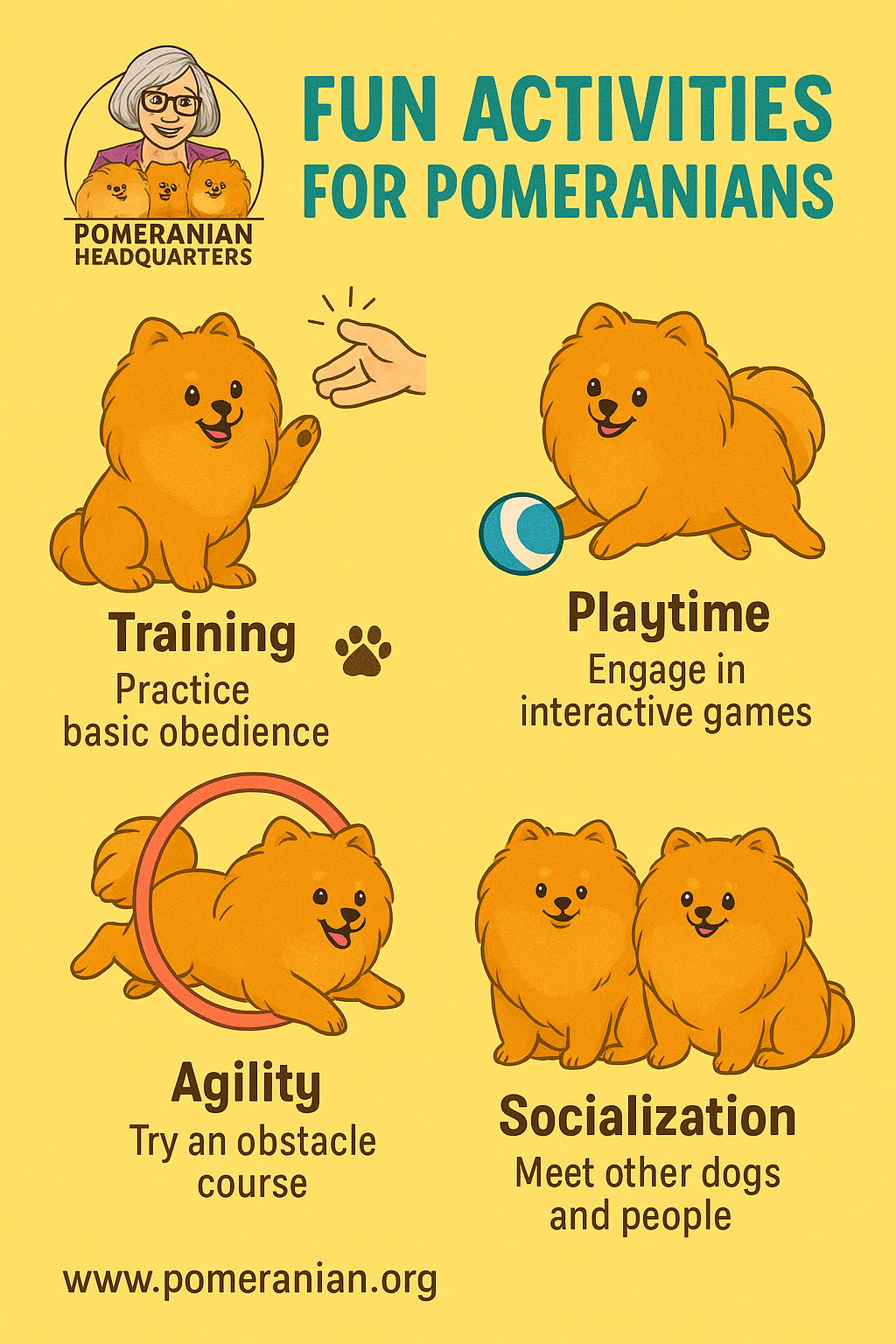
Training your Pomeranian to socialize well is very important. Socialization helps your dog feel safe with others.
Good social skills make your Pomeranian happy and calm in many situations.
Introducing To Other Dogs
Let your Pomeranian meet other dogs in a safe place. Choose calm dogs for the first meetings.
Keep meetings short and watch your dog’s body language. Praise your dog for good behavior.
- Start in a quiet park or yard
- Use a leash for control
- Allow sniffing and gentle play
- Stop if your dog shows fear or aggression
Meeting New People
Help your Pomeranian meet different people often. Introduce your dog to adults and children calmly.
Let people offer treats and speak softly. This builds trust and reduces fear of strangers.
- Invite friends over regularly
- Take walks in busy areas
- Encourage gentle petting
- Avoid forcing interactions
Exposure To Different Environments
Take your Pomeranian to many places to explore new sights and sounds. This helps them adapt well.
Visit parks, streets, pet stores, and quiet outdoor areas. Let your dog observe and move at their own pace.
- Use a secure leash at all times
- Bring favorite toys or treats
- Watch for signs of stress
- Give breaks if needed
Dealing With Behavioral Issues
Training a Pomeranian can be fun but sometimes challenging. These small dogs may show some behavior problems. Understanding how to handle these issues helps build a strong bond.
Common problems include excessive barking, separation anxiety, and chewing on things. Let’s look at ways to manage each of these behaviors.
Managing Barking
Pomeranians often bark to get attention or warn about strangers. This can become a problem if it happens too much. Teaching your dog when to be quiet is important.
Use calm commands like “quiet” and reward your dog when it stops barking. Avoid yelling, as it may make barking worse.
- Notice what triggers the barking
- Give a clear “quiet” command
- Reward silence with treats or praise
- Ignore barking that seeks attention
- Practice regularly in calm settings
Addressing Separation Anxiety
Pomeranians can feel sad or scared when left alone. This causes them to cry, bark, or act restless. Helping your dog feel safe alone reduces this anxiety.
Start by leaving your dog alone for short times. Give a favorite toy or treat to keep it busy. Gradually increase the time you are away.
- Create a cozy spot with bedding
- Use toys that distract and comfort
- Practice short absences often
- Stay calm and quiet when leaving
- Consider calming music or scents
Preventing Destructive Chewing
Pomeranians chew to explore or relieve stress. This can damage furniture or shoes. Teaching what is okay to chew keeps your home safe.
Provide plenty of chew toys and praise your dog for using them. If your dog chews something wrong, gently redirect to a toy.
- Offer a variety of safe chew toys
- Keep personal items out of reach
- Use commands like “leave it”
- Reward good chewing behavior
- Exercise your dog to reduce stress
Maintaining Training Progress
Training a Pomeranian dog takes time and patience. Keeping the progress steady is key to success.
Regular care helps your dog remember what it learns. It also builds good habits that last.
Regular Practice Tips
Practice training every day, even for a few minutes. Short, frequent sessions work best for Pomeranians.
Keep training fun and positive. Use clear commands and be patient if your dog takes time to learn.
- Set a daily training schedule
- Use the same words for commands
- End sessions on a happy note
- Avoid long, tiring lessons
Reward Systems
Reward your Pomeranian with treats or praise to encourage good behavior. Rewards help them learn faster.
Use small treats that your dog likes. Give rewards right after the right action to connect it with good behavior.
- Use soft, small treats
- Praise with kind words and petting
- Offer rewards immediately after training
- Reduce treats as your dog improves
Adjusting Training As They Grow
Pomeranians change as they grow. Training should change too. Adjust lessons to match their age and energy.
Increase challenges slowly. Older dogs can learn harder commands. Keep sessions fun and suited to their needs.
- Start with basic commands for puppies
- Add new skills as your dog matures
- Shorten sessions if your dog gets tired
- Keep training interesting with new activities

Credit: www.youtube.com
Frequently Asked Questions
How Long Does It Take To Train A Pomeranian?
Training a Pomeranian usually takes 4 to 8 weeks with consistent effort. Short daily sessions work best. Patience and positive reinforcement speed up learning. Early socialization and basic commands should be prioritized for effective training results.
What Is The Best Age To Start Training?
Start training your Pomeranian as early as 8 weeks old. Puppies learn quickly at this age and adapt well. Early training helps establish good behavior patterns and social skills, setting a strong foundation for future learning.
How Do I Potty Train My Pomeranian Effectively?
Use a consistent schedule and take your Pomeranian outside frequently. Reward them immediately after they eliminate outdoors. Crate training helps prevent accidents. Patience and positive reinforcement are key for successful potty training.
What Commands Should I Teach First?
Begin with basic commands like sit, stay, come, and down. These commands build control and communication. Use treats and praise to encourage learning. Start simple and gradually increase difficulty for best results.
Conclusion
Training your Pomeranian takes time and patience. Use short, clear commands each day. Reward good behavior with treats and praise. Keep training sessions fun and consistent. Small steps lead to big progress. Remember, your dog learns best with kindness. Enjoy the bond that grows from training.
Happy training makes your Pomeranian a happy pet.

Emily Barker is the founder of ChillDogLife.com, a space dedicated to helping pup parents discover the best dog products, lifestyle tips, and cozy ideas for happier homes.
A lifelong dog lover, Emily combines her passion for pets with a knack for research to share trusted recommendations on everything from toys and furniture to health and everyday care.
Her goal is simple: to make life easier, stylish, and more joyful for dogs and the people who love them.




