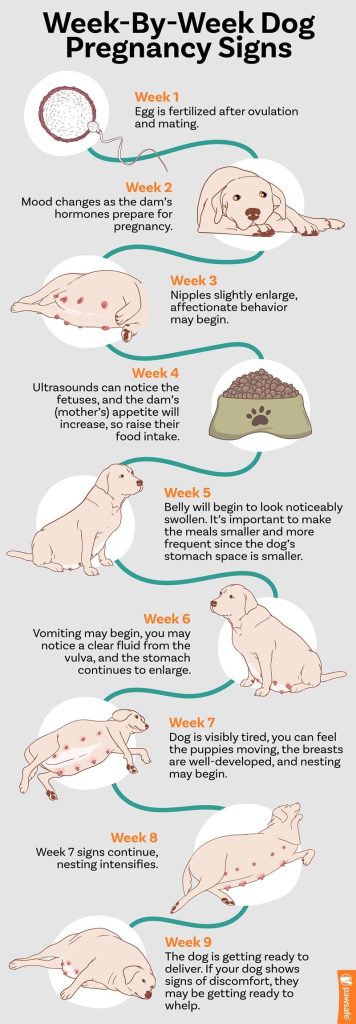
Are you curious about what to expect as your dog goes through pregnancy? Understanding your pregnant dog’s behavior week by week can help you provide the best care and support she needs.
From subtle changes in her mood to physical signs, knowing what’s normal and when to act will ease your worries and strengthen your bond. Keep reading to discover the key milestones in your dog’s pregnancy and how you can prepare for each stage with confidence.
Early Pregnancy Signs
When a dog is pregnant, her body and behavior change. Early signs help owners understand she is expecting.
Recognizing these signs lets you provide better care during pregnancy. Watch for changes in appetite, behavior, and body.
Changes In Appetite
Many pregnant dogs eat less in the early weeks. Nausea or mild sickness can reduce their hunger.
Some dogs may refuse food or be picky. After a few weeks, appetite usually increases to support growing puppies.
- Loss of interest in food
- Eating smaller amounts
- Occasional vomiting
- Increased hunger after week 4
Behavioral Shifts
Pregnant dogs often act differently in early pregnancy. They may become quieter or seek more attention.
Some dogs seem tired and rest more. Others may hide or avoid play. These changes are normal and show her body is adjusting.
- Less energy and playfulness
- More affection or clinginess
- Hiding or wanting solitude
- Resting more often
Physical Symptoms
Physical signs appear in the first weeks. These include mild swelling of the nipples and slight weight gain.
Some dogs may have a softer belly or small discharge. These signs show her body is preparing for puppies.
- Swollen or pink nipples
- Small belly growth
- Clear vaginal discharge
- Possible mild vomiting
Weeks 1 To 3
The first three weeks of a dog’s pregnancy are very important. Changes happen inside her body that start the pregnancy process.
During this time, you may notice small changes in your dog's behavior. Knowing what to expect helps you care for her better.
Implantation Phase
In the first week, the fertilized eggs move to the uterus. They attach themselves to the uterus lining. This is called implantation.
Implantation is a key step. It allows the embryos to get nutrients from the mother. This helps them grow safely.
Mild Mood Changes
Your dog may act a little different during weeks 1 to 3. She might seem more tired or less playful than usual.
Some dogs become clingy and want more attention. Others may eat less for a few days. These changes are normal.
Care Tips
Give your pregnant dog a quiet and comfortable place to rest. Avoid loud noises and stressful situations.
Feed her high-quality food and keep fresh water available. Do not give any medicine without a vet’s advice.
- Keep her exercise gentle and short
- Watch for any unusual signs like vomiting or weakness
- Visit the vet for early pregnancy check-ups
Weeks 4 To 5
During weeks 4 to 5 of pregnancy, a dog’s body starts to change more clearly. You can see signs of her growing puppies inside.
These weeks are important as the puppies develop rapidly. The mother dog will show new behaviors and physical changes.
Noticeable Belly Growth
The dog’s belly begins to swell as the puppies grow inside. This change is often visible to the eye.
You may notice the belly getting rounder and softer. This is a sign that the pregnancy is progressing well.
Increased Fatigue
The mother dog may feel more tired than usual. Her energy levels drop because her body works hard for the puppies.
She might sleep more and rest often. It is important to give her a quiet, comfortable space.
Nesting Behavior
The dog may start looking for a safe place to give birth. She will gather soft materials to make a nest.
This behavior shows she is preparing for the puppies’ arrival. Let her have a calm spot to build her nest.

Credit: pethelpful.com
Weeks 6 To 7
During weeks 6 and 7 of pregnancy, your dog’s body changes quickly. She grows bigger and needs extra care.
Watching her behavior helps you keep her healthy and comfortable in this important time.
Appetite Fluctuations
Your pregnant dog’s appetite may change in weeks 6 and 7. Some dogs eat more to support their growing puppies.
Others may eat less because their stomach feels full or uncomfortable. Offer smaller, frequent meals to help.
- Feed nutrient-rich food in smaller portions
- Watch for signs of hunger or refusal
- Keep fresh water available at all times
Temperature Monitoring
Check your dog’s temperature daily during these weeks. Normal temperature is usually between 101 and 102.5°F (38.3 to 39.2°C).
A drop in temperature below 100°F (37.8°C) can mean labor will start soon. Contact your vet if you see this change.
- Use a digital rectal thermometer for best accuracy
- Take temperature at the same time each day
- Note any sudden temperature changes
Exercise Adjustments
Exercise is important but should be gentle during weeks 6 and 7. Avoid rough play or long walks.
Short, calm walks help keep muscles strong without causing stress to your dog or her puppies.
- Take shorter walks more often
- Choose quiet, safe places for exercise
- Watch for signs of tiredness or discomfort
Weeks 8 To 9
During weeks 8 to 9, a pregnant dog shows clear signs that the birth is near. This time is important for close care and observation.
Knowing what to expect helps you prepare for the puppies’ arrival and support your dog properly.
Whelping Preparation
At this stage, gather all supplies needed for whelping. Keep everything clean and ready to use.
- Prepare clean towels and blankets.
- Have heating pads set to a safe temperature.
- Keep scissors and thread for cutting and tying umbilical cords.
- Arrange a scale to weigh puppies after birth.
- Have a notebook to record birth times and puppy details.
Restlessness Signs
Your dog may pace, pant, or seem anxious. She might dig or try to find a quiet place to lie down.
| Behavior | Meaning |
| Pacing around | Looking for a place to give birth |
| Excessive panting | Feeling discomfort or pain |
| Shivering | Body temperature drop before labor |
| Refusing food | Labor is close |
Safe Space Setup
Create a calm, warm, and safe area for your dog to give birth. Use a box or whelping pen with low sides.
- Place soft blankets or towels on the floor.
- Keep the area quiet and away from other pets.
- Ensure good ventilation without drafts.
- Provide easy access for the dog to enter and exit.
Postpartum Behavior
Understanding postpartum behavior in dogs helps ensure their well-being. This time is crucial for both the mother and her puppies.
Recognizing changes week by week can support a healthy recovery. Let’s explore some key areas.
Mothering Instincts
A new mother shows strong protective behavior. She will stay close to her puppies, keeping them warm and safe.
- Staying in the whelping area
- Frequent grooming of puppies
- Alertness to any noise or intruder
Feeding Patterns
The mother’s diet changes after birth. She needs extra nutrients to produce milk for her puppies.
| Week | Feeding Frequency |
| 1-2 | Every 2 hours |
| 3-4 | Every 3-4 hours |
| 5-6 | Every 4-6 hours |
Health Checks
Regular health checks are vital for the mother and her puppies. This helps detect any problems early.
Common Behavioral Issues
Pregnant dogs often show changes in behavior. These changes can be confusing for owners. Understanding common issues helps in caring for them well.
This guide covers anxiety, aggression, and attention-seeking during pregnancy. Each section explains typical signs and ways to manage them.
Anxiety And Stress
Pregnant dogs may feel anxious or stressed. New physical changes and hormones affect their mood. They might pace, whine, or hide more often.
- Restlessness or pacing
- Excessive whining or barking
- Hiding or avoiding people
- Licking themselves or objects more
Aggression
Some pregnant dogs show aggression to protect their space. This behavior can be toward other pets or even people. It is a natural way to guard their unborn puppies.
| Behavior | Possible Cause |
| Growling or snapping | Protecting puppies |
| Guarding food or toys | Increased territorial feelings |
| Refusing to be touched | Physical discomfort or stress |
Seeking Attention
Pregnant dogs may want more attention than usual. They seek comfort and reassurance from their owners. This helps reduce their stress and anxiety.
Common signs of attention-seeking include:
- Following you around the house
- Resting near you more often
- Begging for petting or play
- Becoming clingy or vocal

Credit: www.calmshops.co.uk
Health And Nutrition Tips
A pregnant dog’s health is important for her and her puppies. Proper nutrition and care support their growth and well-being. Understanding her needs helps ensure a healthy pregnancy.
Each week of pregnancy brings changes. Knowing what to expect can guide you in providing the best care. Here are key areas to focus on during this time.
Balanced Diet
A balanced diet is crucial for a pregnant dog’s health. She needs extra nutrients to support her growing puppies. Quality dog food with high protein is recommended.
- Choose dog food with high-quality ingredients
- Include lean meats and healthy grains
- Avoid artificial preservatives and fillers
Hydration Needs
Proper hydration is vital during pregnancy. A pregnant dog should always have access to fresh, clean water. This helps her maintain energy and supports milk production.
Veterinary Care
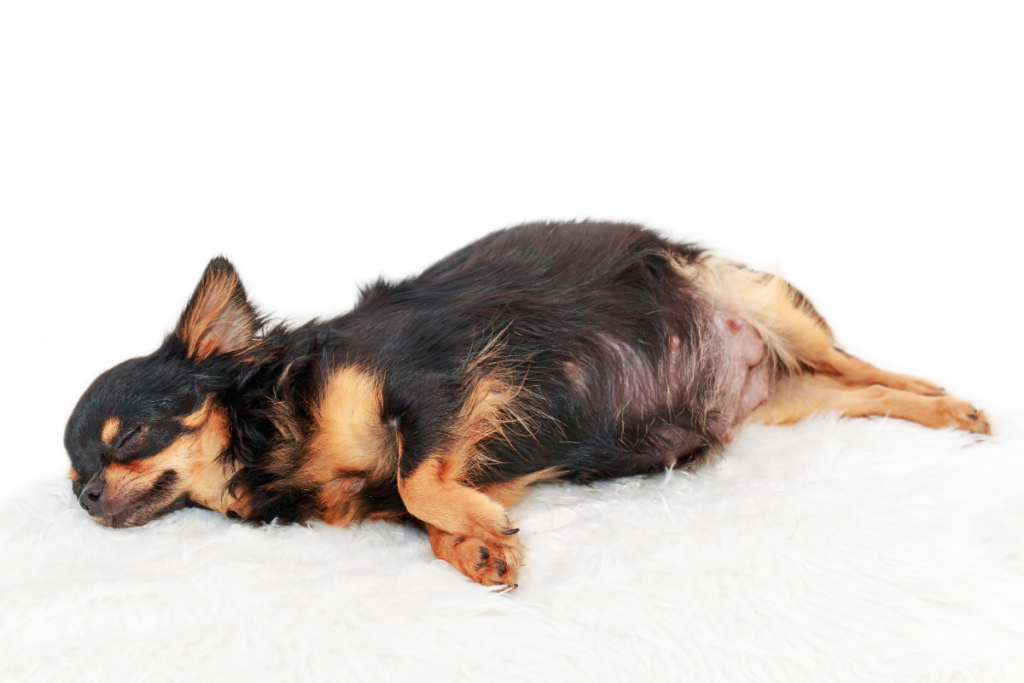
Regular veterinary care is essential for a pregnant dog. It ensures she is healthy and her puppies are developing well. Schedule check-ups throughout her pregnancy.
| Week | Veterinary Check |
| Week 3 | Confirm pregnancy |
| Week 6 | Ultrasound check |
| Week 9 | Final health assessment |
Credit: post.bark.co
Frequently Asked Questions
How Does A Pregnant Dog Behave In The First Week?
In the first week, a pregnant dog may show slight tiredness and reduced appetite. She might also seek more affection and rest, though visible changes are minimal. Early pregnancy symptoms are subtle, so close observation is key for timely care.
What Are Common Behaviors In Mid-pregnancy Weeks?
During mid-pregnancy, dogs often become more affectionate and may nest. Appetite usually increases, and weight gain is noticeable. Some dogs may show mild mood changes or rest more. These behaviors help prepare her for the upcoming birth and puppy care.
How Can I Identify Nesting Behavior In Pregnant Dogs?
Nesting behavior includes digging, scratching, and arranging bedding materials. This instinctive behavior appears in late pregnancy as she prepares a safe space. Monitoring nesting helps you provide a comfortable area for whelping and reduces stress for the dog.
When Do Pregnant Dogs Show Appetite Changes?
Pregnant dogs typically show appetite changes around the third or fourth week. Early pregnancy may cause slight appetite loss, but it usually increases as pregnancy progresses. Proper nutrition during this time is vital for the health of the mother and puppies.
Conclusion
Pregnant dogs change week by week in many ways. Watching her behavior helps you understand her needs. She may eat less or want more rest. Nesting and seeking comfort become common signs. Knowing these changes keeps her safe and calm.
Stay patient and gentle throughout her pregnancy. Your care makes a big difference for her puppies. Enjoy this special time with your dog.

Emily Barker is the founder of ChillDogLife.com, a space dedicated to helping pup parents discover the best dog products, lifestyle tips, and cozy ideas for happier homes.
A lifelong dog lover, Emily combines her passion for pets with a knack for research to share trusted recommendations on everything from toys and furniture to health and everyday care.
Her goal is simple: to make life easier, stylish, and more joyful for dogs and the people who love them.




