
Training your dog to become a service dog can change both your lives in amazing ways. Imagine having a loyal companion who not only supports you emotionally but also assists with daily tasks that make your life easier.
But where do you start? How do you turn your furry friend into a reliable helper? You’ll discover simple, step-by-step methods to train your dog effectively. Whether you’re new to training or looking to improve your dog’s skills, these tips will guide you through the process.
Keep reading, and soon you’ll see your dog grow into the trusted service partner you need.
Choosing The Right Dog
Training a dog to be a service dog needs careful thought. Picking the right dog helps make training easier and more effective.
Not every dog fits well for service work. You need to check breed, temperament, and age before starting.
Ideal Breeds For Service Work
Some dog breeds have qualities that suit service work. These dogs are smart, calm, and easy to train.
- Labrador Retriever
- Golden Retriever
- German Shepherd
- Poodle
- Border Collie
These breeds usually have good health and strong work ethics. But mixed breeds with the right traits can also work well.
Assessing Temperament And Behavior
Temperament is key to service dog success. The dog should stay calm under pressure and be friendly with people.
| Trait | Why It Matters |
| Calmness | Handles stress well |
| Focus | Follows commands easily |
| Friendliness | Works well with strangers |
| Confidence | Deals with new situations |
| Social Skills | Interacts safely with others |
Test the dog’s behavior in busy places. Avoid dogs that show fear or aggression.
Age Considerations For Training
Start training early but avoid puppies too young. Dogs learn best between six months and two years old.
- Choose dogs at least six months old
- Young adult dogs learn faster
- Older dogs may need more patience
- Consider health and energy levels
Early socialization helps dogs adapt quickly. Avoid starting with dogs older than five years for best results.
Basic Obedience Training
Training a dog to become a service dog starts with basic obedience. This training builds a strong foundation. It helps your dog learn to listen and follow your commands.
Obedience training is important for safety and reliability. It also creates good habits for your service dog’s future tasks.
Essential Commands To Teach
Teaching basic commands helps your dog understand what you expect. These commands make it easier to control your dog in public.
- Sit:Your dog learns to stay calm and wait.
- Stay:Keeps your dog in place until you say otherwise.
- Come:Calls your dog back to you quickly.
- Heel:Your dog walks close by your side.
- Down:Your dog lies down and stays quiet.
Building A Strong Bond
A strong bond helps your dog trust and listen to you. Spend time together every day for training and play.
Positive attention and rewards make your dog want to learn. Use treats, praise, and petting to show you care.
- Practice commands in short, fun sessions
- Be calm and clear with your voice
- Show love and patience during training
Consistency And Patience
Training a service dog takes time. Be consistent with commands and routines every day.
Patience helps your dog learn at its own pace. Do not rush or get frustrated if progress is slow.
- Use the same words for each command
- Train in different places to build focus
- Repeat training regularly to keep skills sharp
Specialized Service Skills
Training a dog to be a service dog requires teaching special skills. These skills help the dog assist a person with specific needs. The training focuses on tasks, staying calm in busy places, and behaving properly in public.
Each dog learns tasks that match their handler’s needs. They also learn how to ignore distractions. Proper public behavior is key for safety and respect.
Task-specific Training
Service dogs must learn tasks that help their handler daily. These tasks depend on the handler’s disability. Training is clear and consistent to make sure the dog performs well.
- Retrieve items like keys or phone
- Open and close doors
- Provide balance support
- Alert to sounds or medical changes
- Guide safely around obstacles
Handling Distractions
Service dogs face many distractions outside. They learn to focus on their handler and tasks. Training includes practice in busy places with noises and people. The dog must ignore food, other animals, and sudden sounds.
| Distraction Type | Training Method |
| Other animals | Controlled exposure with rewards for calm behavior |
| Food smells | Practice ignoring treats and food on the ground |
| Loud noises | Gradual introduction to sounds with positive reinforcement |
| People approaching | Teach dog to stay close and focused on handler |
Public Access Etiquette
Service dogs must behave well in public places. They need to stay calm and follow commands. This helps keep the handler safe and respected. Training covers proper behavior at stores, restaurants, and public transport.
- Walk close to the handler without pulling
- Ignore other people and animals
- Stay quiet and calm in crowds
- Wait patiently when the handler is busy
- Follow all handler commands immediately
Socialization Techniques
Training a dog to be a service dog requires strong social skills. Socialization helps the dog stay calm and confident in many situations. It teaches the dog to focus and work well with others.
Good socialization starts early and continues throughout training. It includes meeting new people, animals, and being in different places.
Introducing New Environments
Expose your dog to many places. Start with quiet spots and slowly visit busy areas. This helps the dog get used to sounds and sights without getting scared.
- Begin in a calm park or garden.
- Visit stores or outdoor markets.
- Take short trips on public transport.
- Practice walking near traffic and crowds.
- Use treats to reward calm behavior.
Interaction With People And Animals
Service dogs must ignore distractions from people and other animals. Teach your dog to stay focused even when others approach.
| Type of Interaction | Training Tip |
| Meeting strangers | Practice calm greetings and ignoring petting attempts. |
| Other dogs | Allow short, controlled greetings with calm dogs. |
| Children | Teach the dog to stay still around playful kids. |
| Animals like cats | Keep distance at first, then allow slow introductions. |
Managing Stress And Anxiety
Service dogs face many challenges. Watch for signs of stress like panting or pacing. Use calm voices and slow movements to help your dog relax.
- Give the dog short breaks in quiet areas.
- Use favorite toys or treats for comfort.
- Practice deep breathing exercises with your dog.
- Keep a consistent daily routine.
- Consult a trainer if anxiety is severe.
Health And Wellness
Training a dog to be a service dog needs focus on health and wellness. A healthy dog learns better and stays reliable. Caring for your dog keeps it strong and ready to help.
Good health supports training routines and daily tasks. This guide covers key health areas for service dogs.
Regular Veterinary Care
Regular check-ups with a vet keep your service dog in top shape. Vaccinations, dental care, and parasite control are essential. Early detection of health issues prevents bigger problems.
- Schedule vet visits at least twice a year
- Keep vaccinations up to date
- Watch for signs of illness or pain
- Follow vet advice on treatments and care
Nutrition And Exercise
Proper nutrition fuels your service dog’s body and mind. Balanced meals help maintain energy and focus. Exercise builds strength and reduces stress.
| Type | Benefits | Examples |
| Balanced Diet | Supports health and energy | High-quality dog food, fresh water |
| Daily Exercise | Improves muscle tone and mood | Walks, playtime, training sessions |
| Rest | Allows recovery and focus | Quiet time, naps in a comfortable space |
Monitoring For Fatigue
Service dogs work hard and can get tired. Watch for signs of fatigue to prevent burnout. Rest and hydration are key to recovery.
Signs of fatigue include:
- Slowed movements
- Heavy panting
- Disinterest in tasks
- Excessive lying down

Credit: my.americanservicepets.com
Certification And Legal Requirements
Training a dog to be a service dog involves understanding certain legal and certification requirements. These requirements ensure that the dog and handler are both prepared to work in various environments.
It is essential to know the laws and documentation needed to certify a service dog. This helps in gaining access to public spaces and ensures the dog’s role is recognized legally.
Understanding Service Dog Laws
Service dog laws vary by country but generally offer protections to the handler and their service dog. Knowing these laws helps in understanding your rights and responsibilities.
- Service dogs are allowed in public spaces like restaurants and stores.
- Handlers are not required to show certification documents.
- Businesses may only ask if the dog is a service animal and what tasks it performs.
Documentation And Identification
While you do not need to carry documentation, having identification can be helpful. It can make interactions with the public smoother and reduce misunderstandings.
Some common forms of identification include:
- Service dog ID cards
- Vests with service dog insignia
- Certification from a recognized training organization
Working With Professional Organizations
Professional organizations can guide you through training and certification. They provide resources, training programs, and support to ensure your dog meets all the necessary requirements.
| Organization | Service Provided |
| ABC Dog Training | Comprehensive training programs |
| National Service Animal Registry | Certification and ID cards |
| Service Dog Central | Community support and resources |
Troubleshooting Training Challenges
Training a dog to be a service dog can be challenging. You may face issues that require specific solutions. Here, we will explore ways to address these challenges effectively.
Understanding the root cause of problems is crucial. This helps in adjusting methods to meet your dog’s needs. Let’s look into common challenges and ways to handle them.
Correcting Unwanted Behaviors
Dogs might develop habits that are not suitable for service work. Address these behaviors promptly to ensure successful training.
- Identify the behavior and its triggers.
- Use positive reinforcement to encourage desired actions.
- Be consistent with commands and rewards.
Adjusting Training Methods
Sometimes, the training methods need a change. Tailor your approach to better suit your dog’s learning style.
| Method | Adjustment |
| Verbal Commands | Use hand signals for clarity |
| Repetitive Drills | Incorporate play to maintain interest |
| Solo Training | Include group sessions for social skills |
Seeking Professional Help
If challenges persist, consider professional training. Experts can offer valuable insights and techniques.
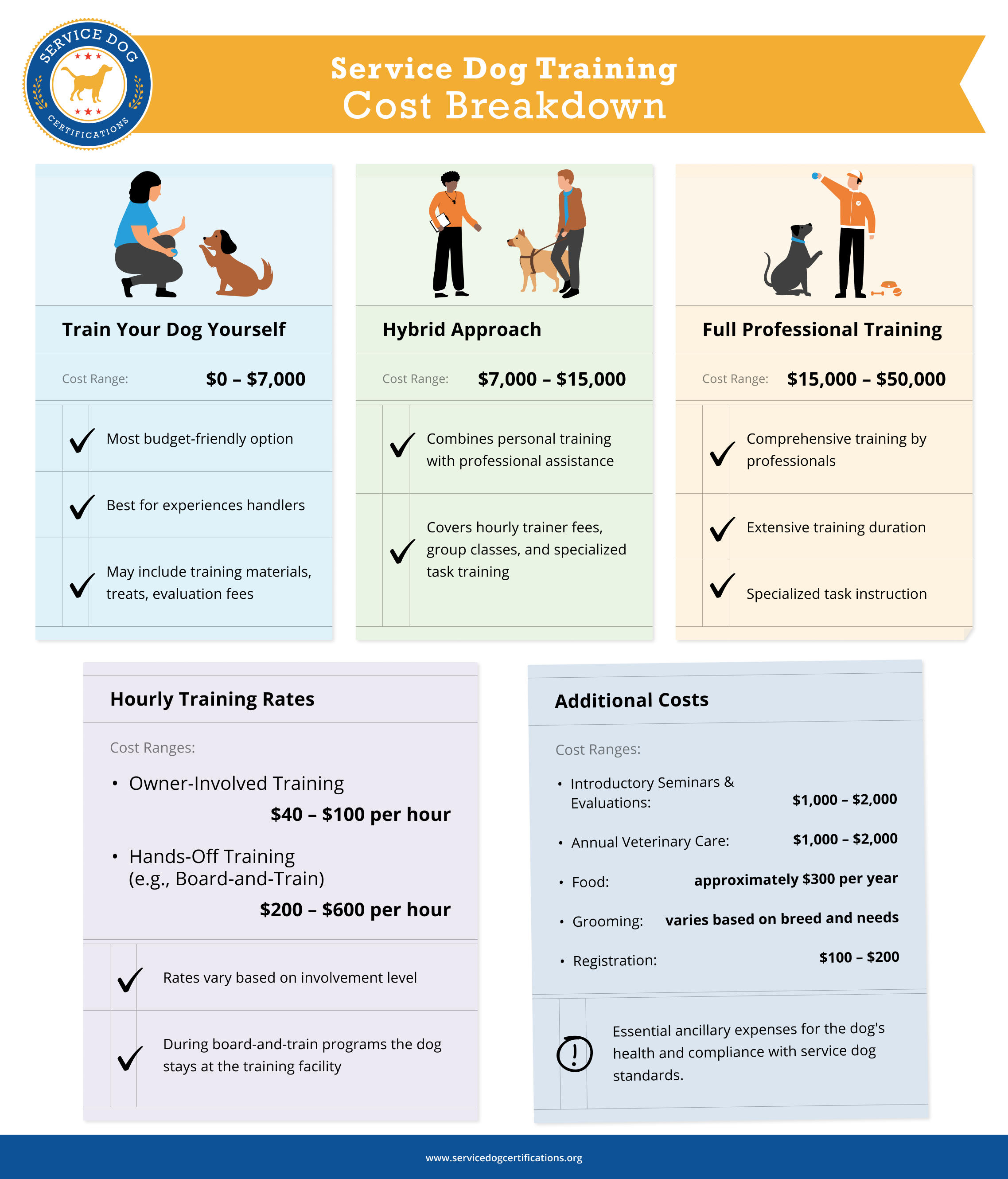
Credit: www.servicedogcertifications.org

Credit: pawsforsupport.com.au
Frequently Asked Questions
What Are The Basic Steps To Train A Service Dog?
Start with obedience training, socialization, and public access skills. Teach specific tasks related to the handler’s disability. Use positive reinforcement and consistency throughout the process. Gradually expose the dog to various environments to build reliability and confidence.
How Long Does It Take To Train A Service Dog?
Training typically takes 6 months to 2 years. The timeframe depends on the dog’s breed, temperament, and tasks required. Consistent daily training and professional guidance speed up progress. Ongoing training ensures the dog maintains skills and good behavior.
Can Any Dog Become A Service Dog?
Not all dogs qualify as service dogs. Ideal dogs are calm, intelligent, and eager to work. They must be socially adaptable and able to focus in distractions. Professional evaluation helps determine if a dog suits service work.
What Tasks Can A Service Dog Perform?
Service dogs can perform many tasks like guiding, alerting, retrieving items, or providing stability. Tasks depend on the handler’s specific disability needs. These dogs enhance independence and safety for people with disabilities.
Conclusion
Training a dog to become a service dog takes time and patience. Consistent practice helps your dog learn important tasks. Clear commands and rewards guide their behavior well. Focus on socializing your dog in different places. This builds confidence and reduces distractions.
Remember, every dog learns at its own pace. Stay calm and positive throughout the process. A well-trained service dog can change lives. Keep training simple and steady for best results. Your effort makes a big difference for your dog.

Emily Barker is the founder of ChillDogLife.com, a space dedicated to helping pup parents discover the best dog products, lifestyle tips, and cozy ideas for happier homes.
A lifelong dog lover, Emily combines her passion for pets with a knack for research to share trusted recommendations on everything from toys and furniture to health and everyday care.
Her goal is simple: to make life easier, stylish, and more joyful for dogs and the people who love them.




