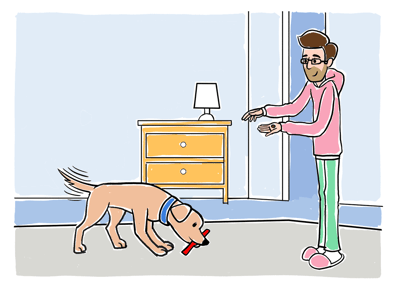
Imagine walking into your living room and seeing your dog happily tidying up their own toys. Sounds like a dream, right?
Teaching your dog to put toys away isn’t just a neat trick—it makes your home cleaner and playtime more fun for both of you. If you’ve ever wished your furry friend could help with cleanup, this guide is exactly what you need.
Keep reading, and you’ll discover simple, effective steps to turn your playful pup into a tidy helper.

Credit: www.ellevetsciences.com
Benefits Of Teaching Cleanup
Teaching your dog to put toys away is more than just a neat trick. It helps create a tidy home and builds good habits.
This simple task can improve your dog’s behavior and strengthen your connection with them.
Improving Obedience
Teaching your dog to clean up helps them listen and follow commands better. It trains them to wait for instructions.
Regular practice builds discipline and makes your dog more responsive in other areas.
- Increases attention to your commands
- Encourages patience and control
- Builds habit of following routines
Enhancing Mental Stimulation
Picking up toys challenges your dog’s mind. It makes them think and solve problems.
This mental workout keeps dogs sharp and helps reduce boredom.
- Boosts memory by remembering toy locations
- Improves problem-solving skills
- Reduces destructive behavior due to boredom
Strengthening Bond
Teaching cleanup is a teamwork activity. It builds trust between you and your dog.
Working together on tasks increases positive feelings and deepens your relationship.
- Creates shared goals and success
- Encourages positive communication
- Builds mutual respect and affection
Choosing The Right Toys
Teaching your dog to put toys away starts with choosing the right toys. The right toys keep your dog safe and interested.
This guide covers picking safe toys, limiting choices, and organizing toy storage for easy training.
Selecting Safe Toys
Pick toys made from non-toxic materials. Avoid toys with small parts that can be swallowed. Choose toys that match your dog’s size and chewing strength.
- Use durable rubber or nylon toys
- Avoid plush toys with loose stuffing
- Check toys often for wear and tear
- Choose toys that are easy to clean
Limiting Toy Choices
Too many toys can confuse your dog. Keep only a few toys out at a time to focus attention. Rotate toys weekly to keep interest high.
| Benefit | Explanation |
| Less Mess | Fewer toys make cleanup easier |
| Better Focus | Dog learns to play with specific toys |
| Longer Toy Life | Rotating toys prevents quick wear |
Organizing Toy Storage
Use a designated box or basket for toys. Teach your dog to bring toys to this spot. Clear storage helps keep toys tidy and ready for play.
- Choose a low basket for easy access
- Place storage in a quiet corner
- Label the basket with a picture or word
- Encourage your dog to drop toys here after play
Setting Up A Toy Box
Teaching your dog to put toys away helps keep your space tidy. Setting up a toy box is the first step. It makes cleaning up easier for both of you.
A good toy box should be easy to use and fit your home well. Let’s look at how to pick the right container, choose a spot, and make it easy for your dog to reach.
Picking A Container
Choose a container that can hold all your dog’s toys. It should be big enough but not too heavy. Plastic bins, baskets, or wooden boxes work well.
- Make sure the container is safe with no sharp edges.
- Pick one with a wide opening for easy access.
- Consider a container with a lid to keep toys clean.
- Choose a size that fits your dog’s toy collection.
Designating A Spot
Find a spot in your home where the toy box will stay. It should be a place your dog visits often. Keep it away from high-traffic areas to avoid trips and falls.
| Spot | Reason |
| Living room corner | Close to play area |
| Near dog’s bed | Easy to reach after play |
| Entryway | Good for quick cleanups |
Making It Accessible
Your dog needs to reach the toy box easily. Place it at a height your dog can access without help. Avoid lids that are too heavy or hard to open.
- Keep the toy box on the floor or low shelf.
- Remove lids if they are difficult for your dog.
- Make sure toys are easy to grab and put away.
- Use a container with handles for easy moving.
Credit: www.chewy.com
Basic Commands To Teach
Teaching your dog to put toys away helps keep your home tidy. It also strengthens your dog’s listening skills.
Start with simple commands that your dog can learn quickly. These commands build a foundation for putting toys away.
Teaching ‘drop It’
The ‘Drop It’ command tells your dog to release an object from its mouth. This is useful for getting toys back.
Use a treat to encourage your dog to drop the toy. Show the treat and say “Drop it” clearly.
- Offer a treat near your dog’s nose
- Say “Drop it” in a calm voice
- Wait for your dog to release the toy
- Praise and give the treat immediately
- Repeat until your dog responds quickly
Introducing ‘take It’
The ‘Take It’ command lets your dog know when to pick up a toy. It helps control when your dog grabs items.
Hold a toy and say “Take it” in a friendly tone. Let your dog take the toy and praise them for following the command.
- Hold the toy in front of your dog
- Say “Take it” clearly
- Allow your dog to grab the toy
- Give praise or a treat
- Practice often to build understanding
Using ‘place’ Command
The ‘Place’ command teaches your dog to go to a specific spot. You can use this for a toy box or mat.
Lead your dog to the toy box and say “Place.” Reward your dog for staying near or inside the box.
- Pick a spot for toys, like a box or mat
- Guide your dog to the spot
- Say “Place” while pointing to the spot
- Give a treat when your dog stays there
- Practice with toys and praise good behavior
Step-by-step Training Process
Teaching your dog to put toys away helps keep your home tidy. It also gives your dog a clear task to follow.
This guide shows a simple training process in three parts. Each part builds on the last to help your dog learn well.
Encouraging Toy Retrieval
Start by getting your dog interested in the toys. Use a favorite toy to catch their attention. Show excitement and say a cue like “fetch.”
- Pick a toy your dog likes.
- Throw it a short distance.
- Use a clear word like “get it.”
- Cheer when your dog picks it up.
Guiding To The Toy Box
Next, teach your dog where to put the toy. Point to the toy box and say a command like “toy box.” Walk with your dog if needed.
| Command | Action |
|---|---|
| “Toy box” | Point to the toy box |
| Walk with dog | Guide dog to the box |
| Encourage | Use praise to motivate |
Rewarding Proper Placement
When your dog drops the toy in the box, give a treat or praise. This makes your dog want to repeat the action.
- Say a cue like “drop it.”
- Wait for the toy to be released in the box.
- Give a treat immediately.
- Use happy words to praise.
Tips For Consistency
Teaching your dog to put toys away needs steady work. Consistency helps your dog learn fast. Use the same words and actions every time.
Keep training clear and simple. This makes it easier for your dog to understand and follow commands.
Short Training Sessions
Dogs learn better in short bursts. Keep sessions under 10 minutes. This stops your dog from getting bored or tired.
- Train two to three times a day
- End each session on a positive note
- Focus on one command at a time
- Give your dog breaks to relax
Positive Reinforcement
Reward your dog when it puts toys away. This encourages good behavior. Use treats, praise, or playtime as rewards.
| Type of Reward | When to Use |
| Treats | Right after toy is put away |
| Praise | Use happy voice and petting |
| Playtime | After several successful tries |
Patience And Repetition
Learning takes time. Repeat commands often. Be patient and calm during training. Avoid showing frustration.
Tips for patience:
- Stay calm even if your dog is slow
- Repeat commands clearly and gently
- Give your dog time to understand
- Practice daily for steady progress
Troubleshooting Common Issues
Teaching your dog to put toys away can be tricky. Some dogs face challenges during training.
Here are common issues and ways to address them. This will help your dog learn effectively.
Ignoring The Toy Box
Sometimes dogs ignore the toy box altogether. They might not understand what to do.
Use treats to guide them towards the box. Make the toy box a fun place for them.
- Place treats inside the toy box
- Reward them when they go near it
- Use a command like “box” to help them learn
Dropping Toys Elsewhere
Dogs may drop toys away from the box. This can be frustrating during training.
Show them where to place toys. Use a command like “drop here” near the box.
- Guide their paw to the box
- Practice with their favorite toy
- Repeat until they learn the correct spot
Lack Of Interest
Some dogs lose interest quickly. Keep training sessions short to maintain focus.
Switch toys to keep them engaged. Use toys they love to spark interest.
- Rotate toys during training
- Reward them with praise or a treat
- Keep sessions under 10 minutes

Credit: www.3lostdogs.com
Advanced Training Ideas
Teaching your dog to put toys away is a fun way to keep your space tidy. It also builds good habits and strengthens your bond.
Once your dog learns the basics, you can try advanced training ideas. These techniques make cleanup easier and more organized.
Adding Multiple Toy Boxes
Using more than one toy box helps when your dog has many toys. Place boxes in different rooms or areas your dog uses often.
Teach your dog to choose the correct box by name or location. This adds a challenge and makes cleanup faster for you.
- Label each box with a color or name
- Practice putting specific toys in each box
- Reward your dog for choosing the right box
- Gradually increase the number of toys to put away
Teaching Cleanup On Cue
Teaching your dog a special word or phrase helps start cleanup anytime. Use a clear and simple cue like “Toys away” or “Clean up.”
Say the cue before your dog begins to pick up toys. Repeat this during training sessions to build the habit.
- Use the cue each time you want your dog to clean up
- Give treats or praise immediately after cleanup
- Practice with different toys and rooms
- Be patient and keep sessions short
Involving Family Members
Get everyone in your household to help with training. Consistent commands and rewards from all family members speed up learning.
Teach each person how to give the cleanup cue and reward the dog. This teamwork keeps training steady and fun for your dog.
- Show family members the training routine
- Agree on one cleanup cue word
- Encourage everyone to praise the dog
- Make cleanup a daily group activity
Frequently Asked Questions
How Do I Start Teaching My Dog To Put Toys Away?
Begin by selecting a specific toy box and teaching your dog to recognize it. Use clear commands like “put away” and reward your dog with treats when they place toys in the box. Consistent practice is key for success.
What Commands Help Dogs Learn Toy Cleanup?
Common commands include “put away,” “tidy up,” or “clean up. ” Choose a simple, consistent phrase. Pair the command with hand gestures and positive reinforcement to help your dog associate the action with the words.
How Long Does It Take To Train A Dog To Tidy Toys?
Training time varies but usually takes a few weeks of daily sessions. Consistency, patience, and positive rewards speed up the process. Each dog learns at its own pace depending on breed and prior training.
Can All Dogs Learn To Put Toys Away?
Yes, most dogs can learn this task with proper training. Success depends on your dog’s motivation and your training approach. Use treats and praise to encourage participation, even with stubborn or less focused dogs.
Conclusion
Teaching your dog to put toys away takes time and patience. Start with clear steps and consistent rewards. Keep training sessions short and fun to hold your dog’s interest. Praise your dog often to encourage good behavior. Small daily efforts bring great results.
Soon, your dog will enjoy helping with toy cleanup. This skill makes playtime neater and builds your bond. Practice regularly for lasting success. Your dog will feel proud and happy to help around the house. Simple training creates a calm and tidy home environment.

Emily Barker is the founder of ChillDogLife.com, a space dedicated to helping pup parents discover the best dog products, lifestyle tips, and cozy ideas for happier homes.
A lifelong dog lover, Emily combines her passion for pets with a knack for research to share trusted recommendations on everything from toys and furniture to health and everyday care.
Her goal is simple: to make life easier, stylish, and more joyful for dogs and the people who love them.




