
Imagine walking into your living room and seeing your dog happily tidying up their toys all by themselves. It sounds like a dream, right?
Teaching your dog to put away toys is not only a fun trick but also a great way to keep your home neat without the constant mess. In this post, you’ll discover simple, step-by-step methods to help your furry friend learn this helpful habit quickly.
Ready to turn playtime into clean-up time? Let’s dive in and make your life a little easier—one toy at a time.

Credit: www.ellevetsciences.com
Benefits Of Toy Cleanup
Teaching your dog to put away toys does more than tidy up your living space. It creates a positive routine that benefits both you and your furry friend. Understanding the benefits of toy cleanup can motivate you to make this training a regular habit.
Safety And Organization
Keeping dog toys off the floor reduces the risk of tripping for everyone in the house. Sharp or broken toys can cause injuries if left scattered around. When toys are organized in one place, you can easily check for damage and replace worn-out items, ensuring your dog always plays with safe toys.
Imagine walking barefoot in your living room and stepping on a small chew toy. It’s uncomfortable and could even hurt. By teaching your dog to clean up, you protect your home environment from such accidents.
Building Responsibility
Training your dog to put away toys encourages a sense of responsibility. It’s a fun way to engage their mind and reinforces good behavior. This task helps your dog learn to follow commands and understand their role within the family.
Think about how this simple act builds trust between you and your dog. When your dog participates in cleanup, you’re showing them that their actions matter. Doesn’t it feel rewarding when your pet takes part in keeping the home neat?
Choosing The Right Toys And Storage
Teaching your dog to put away toys starts with choosing the right items and storage. The toys should be safe and strong. The storage must be easy to reach and use. This helps your dog learn faster and enjoy the process.
Selecting Durable Toys
Pick toys that can handle chewing and rough play. Soft toys may tear quickly and cause frustration. Durable toys last longer and stay safe. Look for materials like rubber or thick fabric. Avoid toys with small parts that can break off. Choose toys your dog likes to keep them interested.
Picking Accessible Storage
Choose storage that your dog can reach easily. Low bins or open baskets work well. The container should be stable and not tip over. Clear storage helps your dog see where to put toys. Label the storage spot with a picture or word. This guides your dog to the right place.
Basic Commands To Know
Teaching your dog to put away toys starts with mastering some basic commands. These commands build the foundation for good behavior and make the cleanup process smoother for both of you. Understanding and practicing these commands will make your dog more responsive and eager to help.
Sit And Stay
“Sit” and “Stay” are essential commands that create control and focus. When your dog sits calmly, it’s easier to guide them through the toy-putting-away process without distractions. Practice these commands regularly in different settings to build your dog’s patience and discipline.
Try holding a toy, ask your dog to sit, then say “stay” as you move the toy away. This helps your dog learn to wait calmly before fetching or dropping toys in the right place.
Drop It
The “Drop It” command is crucial for teaching your dog to release toys on command. Without it, your dog might hold onto toys or even become possessive. Start by offering treats when your dog drops a toy, making the action rewarding.
Use a calm, firm voice and practice this with different toys to ensure your dog understands the command in various situations. This command directly supports putting toys away because your dog learns to let go willingly.
Fetch
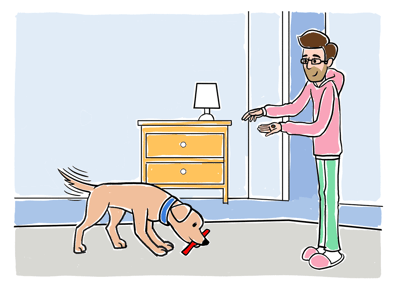
Fetch is more than a fun game; it’s a practical skill for toy cleanup. Teaching your dog to fetch toys on command encourages them to bring toys back to you or a designated spot. Begin by tossing a toy short distances and praising your dog when they return it.
Make the experience positive and consistent. You’ll notice your dog begins to associate fetching toys with praise and treats, making the cleanup process feel like playtime rather than a chore.
Credit: www.preventivevet.com
Step-by-step Training Process
Teaching your dog to put away toys is a fun and useful skill. It helps keep your home tidy and gives your dog a sense of purpose. This step-by-step training process breaks down the task into simple parts. Each part builds on the last, making learning easier for your dog.
Introducing The Cleanup Game
Start by making cleanup a fun activity. Use a happy tone and get your dog’s attention. Show a favorite toy and say a cue like “cleanup” or “put away.” Encourage your dog to touch or pick up the toy. Reward with praise or a treat. Repeat this several times to create a positive connection.
Teaching Toy Retrieval
Next, teach your dog to fetch toys. Toss a toy a short distance. Use commands like “get it” or “bring it here.” When your dog picks up the toy, praise warmly. If your dog returns with the toy, give a treat. Practice often to build this habit. Use different toys to keep interest high.
Guiding Toy Placement
Now, show your dog where to put toys. Choose a box or basket as a toy spot. Lead your dog to the spot with a toy. Use a command like “put it here.” Help your dog drop the toy inside. Reward immediately after. Repeat until your dog understands. Gradually reduce help and wait for your dog to act independently.
Using Rewards Effectively
Using rewards is a powerful way to teach your dog new habits. Rewards help your dog understand which actions you want. They create a positive connection with the task. Your dog will feel happy and eager to learn more.
Effective rewards depend on what you give and when you give it. Giving the right treat and praise keeps your dog motivated. Timing rewards correctly makes training clearer and faster.
Choosing Treats And Praise
Select treats your dog loves and finds special. Small, soft treats work best for quick rewards. Avoid large or hard treats that slow training.
Praise also matters. Use a happy voice and gentle petting. Words like “Good job!” or “Well done!” encourage your dog.
Mix treats and praise to keep your dog excited. Change rewards sometimes to hold your dog’s interest.
Timing Your Rewards
Give rewards immediately after your dog puts away a toy. This helps your dog link the action with the reward.
Wait too long, and your dog may get confused. Be ready to reward every correct action during training.
Use a clicker or a word like “Yes!” to mark the right moment. Then follow quickly with a treat or praise.
Common Challenges And Fixes
Teaching your dog to put away toys can be tricky. Challenges often arise that slow progress. Understanding these common problems helps you fix them quickly. Patience and small adjustments bring better results. Here are some frequent challenges and easy fixes to keep training smooth.
Dealing With Distractions
Dogs get distracted by noises, smells, or other pets. They lose focus and forget the task. Create a quiet training space. Remove toys that are not part of the lesson. Use treats or praise to keep attention. Short sessions work better than long ones. Gradually add distractions as your dog improves.
Handling Reluctance
Some dogs resist picking up or dropping toys. They may not understand the command or find it hard. Choose soft, easy-to-carry toys. Show excitement when your dog picks up a toy. Reward every small step. Avoid forcing the dog. Patience and positive reinforcement build willingness.
Maintaining Consistency
Inconsistent commands confuse dogs. Different words or tones slow learning. Use the same command every time. Ask all family members to follow the same rules. Practice daily but keep training short. Regular routine helps your dog remember and obey quickly.
Making Cleanup Fun
Teaching your dog to put away toys doesn’t have to feel like a chore for either of you. Making cleanup fun transforms the task into an enjoyable game that your dog will want to play again and again. This positive experience encourages your furry friend to participate willingly, turning a simple routine into a bonding moment.
Incorporating Play
Turn tidying up into a playful activity by using toys your dog loves. Start by tossing one toy at a time toward the toy box or basket and encouraging your dog to chase it. Celebrate every successful toss with enthusiastic praise or a quick game of fetch afterward.
Think about how much your dog enjoys playing fetch—why not use that energy to teach cleanup? You can even make it a race, timing how fast your dog can gather and drop toys. This keeps your dog mentally and physically engaged while learning.
Using Positive Reinforcement
Reward your dog immediately when they put a toy away correctly. Use treats, verbal praise, or a favorite toy as a reward to reinforce the behavior. Dogs respond best when they see that good behavior leads to something they like.
Try to be consistent with rewards in the beginning. This helps your dog connect the action with the positive outcome. Over time, you can slowly reduce treats and rely more on praise, making the behavior a habit rather than a task.
Have you noticed how quickly your dog picks up on what pleases you when you reward them consistently? That’s the power of positive reinforcement in action—make it your secret weapon during cleanup training.
Advanced Cleanup Tips
Once your dog masters putting away a single toy, you can move on to advanced cleanup tips. These techniques help your dog handle more complex tasks, making cleanup faster and more efficient. Teaching your dog to organize multiple toys or even other items creates a helpful routine that benefits both of you.
Teaching Multiple Toys
Start by introducing a variety of toys during cleanup sessions. Use clear commands for each toy or group of toys, such as “put the ball away” or “tidy up the plushies.” This helps your dog understand that different items belong in specific spots.
To keep things simple, place distinct baskets or bins labeled with pictures of the toys. This visual cue guides your dog and reduces confusion. Reward your dog with praise or treats when they correctly sort multiple toys.
If your dog struggles, break the process into smaller steps. First, focus on one type of toy at a time, then gradually mix them. Have you noticed how dogs can surprise you when they figure out new challenges?
Extending To Other Tasks
Once your dog is confident with toys, try expanding the cleanup to other household items. This could include fetching slippers, returning the newspaper, or picking up laundry. Use the same consistent commands and reward system to encourage participation.
Keep the new tasks simple and practical. For example, teach your dog to place shoes by the door before bedtime. This keeps your space tidy and strengthens your dog’s role as a helpful companion.
Be patient and watch for your dog’s enthusiasm. Would your dog enjoy being involved in daily chores? Most dogs love the mental stimulation and the chance to earn your praise.

Credit: wearwagrepeat.com
Frequently Asked Questions
How Do I Start Teaching My Dog To Tidy Toys?
Begin by selecting a designated spot for toy storage. Use a command like “tidy up” and reward your dog with treats. Encourage your dog to pick up toys and place them in the storage area. Consistency and patience are key for effective training.
What If My Dog Doesn’t Understand The Command?
If your dog struggles, break down the task. Start with basic commands like “fetch” and “drop. ” Use treats and positive reinforcement to guide your dog. Gradually introduce the new command as they improve. Patience and repetition will help your dog learn.
How Long Does It Take To Train This Behavior?
Training duration varies depending on the dog’s age, breed, and temperament. Some dogs learn in a few weeks, while others may take longer. Consistent practice and positive reinforcement accelerate the learning process. Be patient and celebrate small victories.
Can Older Dogs Learn To Put Away Toys?
Yes, older dogs can learn new tricks, including tidying up toys. Be patient and use positive reinforcement. Older dogs may take longer, but with consistent practice, they can successfully learn this behavior. Adapt your training methods to suit your dog’s needs and abilities.
Conclusion
Teaching your dog to put away toys builds good habits and keeps your home tidy. Start with small steps and be patient. Praise your dog often to encourage good behavior. Practice a little each day for best results. This simple task can make playtime more fun and organized.
Enjoy the process and celebrate progress together. Training your dog strengthens your bond and helps them learn useful skills. Keep it fun and consistent for lasting success.

Emily Barker is the founder of ChillDogLife.com, a space dedicated to helping pup parents discover the best dog products, lifestyle tips, and cozy ideas for happier homes.
A lifelong dog lover, Emily combines her passion for pets with a knack for research to share trusted recommendations on everything from toys and furniture to health and everyday care.
Her goal is simple: to make life easier, stylish, and more joyful for dogs and the people who love them.




