If your dog has just experienced a seizure, you might be feeling worried and unsure about what comes next. You’re not alone—many pet owners struggle to understand how their dog behaves after a seizure and what it means for their health.
Knowing what to expect can help you stay calm and provide the right care when your furry friend needs it most. You’ll discover the common signs of dog after seizure behavior and learn practical tips to support your pet’s recovery.
Keep reading to ensure you’re fully prepared to help your dog bounce back safely and comfortably.
Common Post-seizure Behaviors
Dogs often act differently after a seizure. Their behavior can change for a short time.
These changes can worry owners but are usually normal and temporary.
Disorientation And Confusion
After a seizure, dogs may seem confused or lost. They might not recognize familiar people or places.
This confusion can last from a few minutes to several hours.
Restlessness And Agitation
Some dogs become restless or agitated. They may pace, whine, or act anxious.
- Pacing around the room
- Repeated whining or barking
- Trying to hide or escape
- Increased sensitivity to touch
Temporary Blindness
Temporary blindness can happen after a seizure. Dogs may bump into objects or seem unsure of their surroundings.
Excessive Thirst And Hunger
Dogs often drink and eat more after a seizure. This helps them regain energy.
| Behavior | Reason |
| Increased thirst | Body needs fluids to recover |
| Increased hunger | Energy stores are low after seizure |
Fatigue And Weakness
Fatigue is common after seizures. Dogs may want to rest more and move slowly.
Weakness can affect their legs and balance until they fully recover.
Recognizing Severity
After a seizure, dogs enter a recovery period called the postictal phase. This phase can vary in length and intensity. Watching your dog's behavior closely helps identify if their condition is serious.
Recognizing signs of severity after a seizure can guide you on when to seek veterinary help. Key areas to observe include the duration of the postictal phase, changes in responsiveness, and repeated seizures.
Duration Of Postictal Phase
The postictal phase is the time after the seizure ends. It may last from a few minutes to several hours. Longer recovery times may indicate a more severe episode or underlying issues.
- Short postictal phase: dog recovers quickly and acts normal
- Long postictal phase: dog remains confused or tired for hours
- Very long or worsening symptoms: seek veterinary care immediately
Changes In Responsiveness
Observe how your dog reacts after a seizure. Alertness and awareness should gradually return. Lack of response or strange behavior signals concern.
| Responsiveness Level | What to Watch For | Action Needed |
| Normal | Dog responds to voice and touch | Monitor at home |
| Reduced | Slow to respond or confused | Call veterinarian if lasts over an hour |
| None | No response to stimuli | Seek emergency care immediately |
Repeated Seizures
Repeated seizures in a short time frame are dangerous. This condition is called cluster seizures and needs quick action.
- Note how many seizures your dog has in an hour
- Check if seizures last longer than usual
- Seek emergency veterinary care if seizures repeat or worsen
Immediate Care Steps
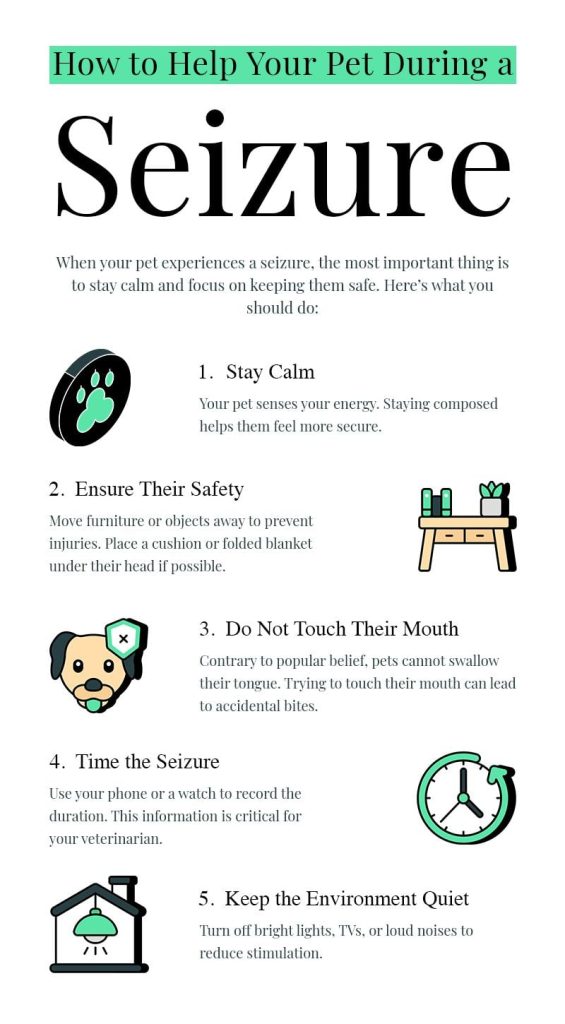
After a dog has a seizure, quick care is very important. You need to help your dog feel safe and calm.
Watching your dog closely helps you know if it needs more help from a vet.
Safe Environment Setup
Make sure the area around your dog is clear. Remove sharp or hard objects that could hurt your dog.
Keep your dog on a soft surface like a bed or blanket. This helps protect its head and body.
- Move furniture or objects that can cause injury
- Place your dog on a soft, flat surface
- Keep the space quiet and dim
- Do not try to hold your dog down
Calming Techniques
Speak to your dog in a soft, gentle voice to help it feel calm. Avoid loud noises or sudden movements.
Stay close but do not touch your dog too much. Let it rest and recover at its own pace.
- Use slow, quiet talking
- Avoid bright lights
- Offer comfort without crowding
- Keep the room calm and peaceful
Monitoring Vital Signs
Check your dog’s breathing and heart rate after the seizure ends. Look for steady breathing and a normal pulse.
Note any unusual signs like difficulty breathing or pale gums. Contact your vet if you see these signs.
- Watch for regular breathing
- Feel the heartbeat near the chest
- Look at gum color for pinkness
- Report any odd signs to a vet quickly
Long-term Support
After a dog has a seizure, long-term care is very important. It helps keep your dog safe and healthy.
Supporting your dog means managing medicine, diet, and regular vet visits. These steps help reduce seizures and improve life quality.
Medication Management
Medications help control seizures in dogs. Giving medicine on time is very important for its success.
Watch for side effects and tell your vet about any changes. Do not stop medicine without advice from your vet.
- Give medicine exactly as prescribed
- Keep a daily log of your dog’s behavior
- Report any side effects to the vet
- Never change dosage without vet approval
Diet And Nutrition Adjustments
Good nutrition supports your dog’s brain health after seizures. Some diets may help lower seizure risks.
Talk to your vet about the best food plan. Avoid treats or foods that can trigger seizures.
- Feed a balanced diet with essential nutrients
- Consider special diets recommended by your vet
- Keep a consistent feeding schedule
- Avoid foods high in sugar or artificial additives
Regular Vet Checkups
Frequent vet visits help track your dog’s health and seizure control. Vets can adjust treatments as needed.
Bring your seizure logs to appointments. This helps the vet make better decisions for your dog’s care.
- Schedule checkups every few months
- Discuss any new symptoms or changes
- Update vaccination and parasite prevention
- Follow vet advice on tests and medication changes
When To Seek Emergency Help
Understanding when to seek emergency help for your dog after a seizure is important. Quick action can make a difference in your pet’s recovery.
Here are some scenarios where immediate veterinary attention is crucial.
Prolonged Seizures
Prolonged seizures, lasting more than five minutes, are dangerous. They can lead to brain damage or other serious health issues.
- Monitor the time of the seizure.
- If it exceeds five minutes, call your vet immediately.
- Do not try to stop the seizure yourself.
Seizure Clusters
If your dog has multiple seizures in a short time, seek help. This condition is called seizure clusters, and it requires urgent attention.
| Number of Seizures | Action Required |
| 1-2 in 24 hours | Monitor closely |
| 3 or more in 24 hours | Contact a vet immediately |
Unusual Behavioral Changes
Watch for unusual behavioral changes after a seizure. These changes might include confusion, aggression, or extreme lethargy.

Credit: medium.com
Preventing Future Seizures
Seizures in dogs can be frightening for both pets and owners. Taking steps to prevent future seizures is very important for your dog’s health and comfort.
Understanding what causes seizures and making changes can help reduce their chances. Learn how to identify triggers, reduce stress, and modify your dog’s environment.
Identifying Triggers
Watch your dog closely to find patterns that may cause seizures. Common triggers include certain foods, loud noises, or bright lights.
- Keep a seizure diary to note time and activities
- Observe changes in diet or environment
- Notice if excitement or stress brings on seizures
- Check if medications or toxins are involved
Stress Reduction Strategies
Stress can trigger seizures in dogs. Helping your dog stay calm lowers the risk of seizures.
| Strategy | How it Helps |
| Regular Exercise | Reduces anxiety and boosts mood |
| Quiet Time | Allows relaxation and rest |
| Consistent Routine | Provides predictability and comfort |
| Calming Products | Uses scents or pressure to soothe |
Environmental Modifications
Changing your dog’s surroundings can lower seizure chances. A safe and calm place helps your dog recover and stay well.
- Remove sharp or hard objects
- Keep the area quiet and dimly lit
- Use non-slip mats to prevent falls
- Limit exposure to bright or flashing lights
Supporting Emotional Recovery
After a seizure, dogs may feel confused and scared. It’s important to support their emotional recovery. Understanding their behavior helps them regain confidence and feel safe.
Providing a calm environment is crucial. Dogs need time to recover emotionally and physically. Be patient and gentle during this period.
Rebuilding Confidence
Building confidence in your dog after a seizure is key. Start by offering comfort and reassurance. Use a soothing voice and gentle touch.
Encourage your dog with simple tasks they enjoy. This helps them feel normal again. Keep these activities short and positive.
- Play their favorite game
- Offer a special treat
- Spend quiet time together
Using Positive Reinforcement
Positive reinforcement boosts your dog’s morale. Praise them for calm behavior and small achievements. This builds trust and happiness.
Reward your dog with treats or affection. This encourages them to stay relaxed and confident. Consistency is important for their recovery.
Engaging In Gentle Activities
Gentle activities help in emotional recovery. Choose calm and safe exercises for your dog. Keep their limits in mind to avoid stress.
Walking in a quiet area or light play is beneficial. These activities keep your dog engaged and happy without overwhelming them.
- Short walks in nature
- Gentle play with familiar toys
- Quiet time with family

Credit: www.petscare.com
Credit: purrfectgrooming.pet
Frequently Asked Questions
What Behavior Changes Occur In Dogs After A Seizure?
After a seizure, dogs may appear confused, tired, or disoriented. They might seek comfort or show unusual aggression. These changes usually last minutes to hours but can vary depending on the seizure’s severity and the dog’s health.
How Long Does Post-seizure Confusion Last In Dogs?
Post-seizure confusion in dogs typically lasts from a few minutes to several hours. The duration depends on the seizure’s intensity and the dog’s overall condition. If confusion persists beyond 24 hours, consult your veterinarian immediately.
Can Dogs Show Aggression After A Seizure?
Yes, some dogs may display temporary aggression after a seizure. This behavior is often due to confusion or fear. It usually resolves quickly, but monitoring your dog closely post-seizure is essential for safety.
When Should I Seek Veterinary Help After A Dog’s Seizure?
Seek veterinary help if seizures last more than five minutes, occur back-to-back, or if your dog doesn’t recover normally. Immediate attention can prevent complications and help manage the condition effectively.
Conclusion
Dogs often act tired or confused after a seizure. They may need quiet time and gentle care. Watch your dog closely and note any changes. Keep a safe space ready for recovery. Talk to your vet about what you see.
Understanding your dog’s behavior helps you support them better. Stay calm and patient during these times. Your care makes a big difference in their recovery. Small steps lead to better health and comfort. Always be ready to help your dog feel safe.

Emily Barker is the founder of ChillDogLife.com, a space dedicated to helping pup parents discover the best dog products, lifestyle tips, and cozy ideas for happier homes.
A lifelong dog lover, Emily combines her passion for pets with a knack for research to share trusted recommendations on everything from toys and furniture to health and everyday care.
Her goal is simple: to make life easier, stylish, and more joyful for dogs and the people who love them.




