
Have you ever wondered how dogs learn new tricks or why they respond to certain sounds? The behaviorism dog experiment holds the key to understanding this.
It reveals fascinating insights about how your furry friend’s actions can be shaped by simple triggers. If you want to discover the secret behind training dogs effectively and why their behavior changes in response to certain signals, this article is made just for you.
Keep reading, and you’ll unlock the science behind your dog’s behavior and how it can help you build a stronger bond with your pet.
Basics Of Behaviorism
Behaviorism is a way to study how living things act. It looks at how behavior changes with experience.
This approach focuses only on what can be seen and measured, not on thoughts or feelings.
Key Principles
Behaviorism teaches that all behavior is learned from the environment. Actions happen because of past rewards or punishments.
Learning happens through two main ways: classical conditioning and operant conditioning.
- Classical conditioning pairs two stimuli to create a new response.
- Operant conditioning uses rewards or punishments to change behavior.
- Behavior can be measured and changed by controlling the environment.
Historical Context
Behaviorism started in the early 1900s. Scientists wanted to make psychology more scientific.
They studied how animals and people learn by watching their actions and reactions.
- 1920s: Behaviorism became popular in psychology.
- Experiments focused on observable behavior, not thoughts.
- It influenced education, therapy, and animal training methods.
Influential Figures
Many scientists helped develop behaviorism. Ivan Pavlov, John B. Watson, and B.F. Skinner are key names.
Pavlov’s dog experiment showed classical conditioning. Watson promoted behaviorism in psychology. Skinner developed operant conditioning.
- Ivan Pavlov:Discovered classical conditioning with dogs.
- John B. Watson:Called for psychology to focus on behavior.
- B.F. Skinner:Studied how rewards and punishments shape behavior.

Credit: medium.com
Famous Dog Experiments
Dogs have been part of many important scientific studies. These studies help us understand behavior better. Some experiments with dogs are very famous.
In this article, we will look at some well-known dog experiments. They include Pavlov’s Classical Conditioning, Skinner’s Operant Conditioning, and other notable studies.
Pavlov’s Classical Conditioning
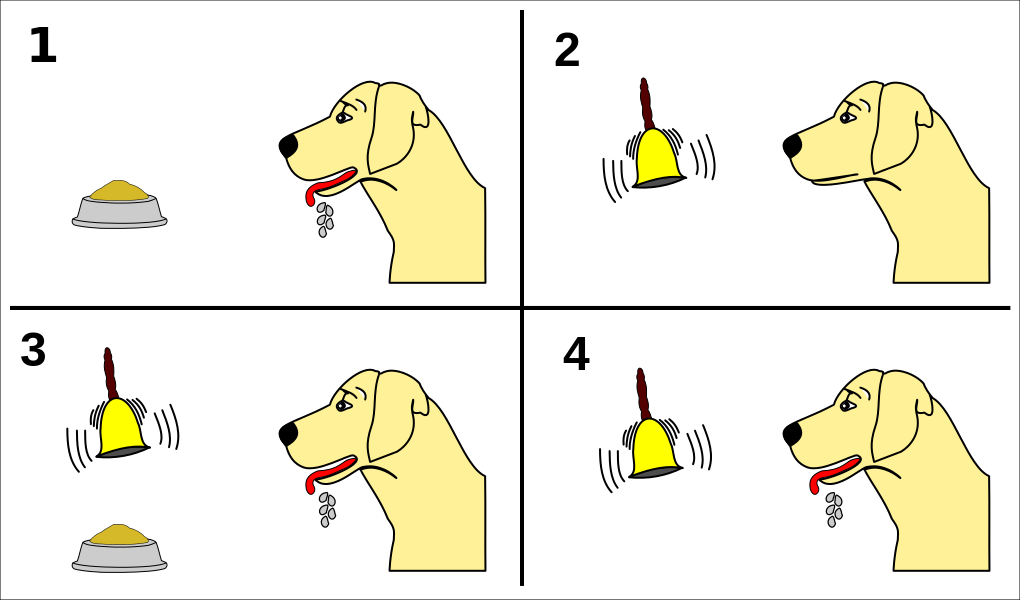
Ivan Pavlov conducted an experiment with dogs. He wanted to understand how they learn new behaviors. Pavlov used a bell and food to teach dogs to salivate at the sound of the bell.
- Pavlov rang a bell before feeding the dogs.
- Dogs learned to associate the bell with food.
- Eventually, dogs salivated when hearing the bell.
Skinner’s Operant Conditioning
B.F. Skinner used dogs to study operant conditioning. He focused on how rewards and punishments shape behavior. Skinner’s experiments showed that behavior can be controlled by consequences.
In Skinner’s box, dogs learned to press a lever. This action gave them a treat. This process demonstrated how behaviors could be taught using rewards.
Other Notable Studies
Beyond Pavlov and Skinner, other scientists have studied dogs. These studies explore various aspects of dog behavior and learning.
| Study | Focus |
| Wolf-Dog Socialization | Social behavior in packs |
| Canine Cognition | Problem-solving skills |
| Attachment Studies | Bonding with humans |
How Dogs Learn
Dogs learn by connecting events and actions. They change behavior based on what happens after they act.
This learning helps dogs understand what to do to get rewards or avoid problems.
Stimulus And Response
A stimulus is something that causes a dog to react. The reaction is called a response.
For example, a bell sound (stimulus) can make a dog salivate (response) if it expects food.
- Stimulus: a sound, sight, or smell
- Response: a dog’s action or behavior
- Learning happens by linking stimulus and response
Reinforcement Types
Reinforcement means giving something to increase behavior. Dogs learn faster with rewards or by avoiding bad things.
There are two main types: positive and negative reinforcement.
- Positive reinforcement:Giving treats or praise after good behavior
- Negative reinforcement:Removing something unpleasant when the dog behaves well
Role Of Repetition
Repetition helps dogs remember what to do. Doing the same action many times makes the learning stronger.
Regular practice helps dogs link the stimulus, response, and reinforcement clearly.
- Repeating commands with rewards
- Practicing in different places
- Consistent timing of reinforcement
Credit: uxdesign.cc
Practical Applications
Behaviorism in dog experiments helps us understand how dogs learn. It shows how rewards and punishments shape their actions.
This knowledge is useful for training dogs, changing bad habits, and building better relationships between dogs and people.
Training Techniques
Training uses behaviorism by rewarding good actions. Dogs learn to repeat behaviors that get treats or praise.
Simple commands like sit, stay, and come become easy to teach with consistent rewards. Timing of rewards is very important.
- Use treats or toys as positive reinforcement
- Give rewards immediately after the desired behavior
- Repeat training sessions daily for best results
- Use clear commands and gestures
Behavior Modification
Behaviorism helps change unwanted behaviors by using rewards and ignoring bad actions. This is called behavior modification.
For example, to stop barking, reward quiet moments and avoid giving attention when the dog barks.
- Identify unwanted behaviors
- Reward alternative good behaviors
- Avoid reinforcing bad behaviors
- Be patient and consistent
Improving Dog-human Bond
Using behaviorism builds trust between dogs and humans. Positive reinforcement creates happy interactions.
Consistent rewards and gentle training make dogs feel safe and loved. This strengthens the bond and cooperation.
- Give praise and treats during training
- Spend quality time playing and training
- Use calm and clear communication
- Respect the dog’s feelings and limits
Critiques And Limitations
The behaviorism dog experiment helped us learn about how animals can be trained. It showed how actions can be linked to rewards or punishments. But this experiment also has some problems and limits.
This section will explain some ethical concerns, compare behaviorism with cognition, and share modern views on the experiment.
Ethical Concerns
The experiment used dogs and made them feel uncomfortable. Some people say it was not kind to the animals. The dogs were made to feel fear or stress to see their reactions.
- Stress and discomfort caused to animals
- Use of punishment to control behavior
- Limited attention to animal welfare
- Questions about consent and rights of animals
Behaviorism Vs. Cognition
Behaviorism focuses on what we can see, like actions and responses. It ignores what happens inside the mind. Cognition studies thoughts, memories, and feelings.
| Aspect | Behaviorism | Cognition |
| Focus | Visible behavior | Mental processes |
| Method | Observation and reward | Thought and memory studies |
| Criticism | Ignores mind | Hard to measure |
Modern Perspectives
Today, scientists mix behavior and cognition to understand animals better. They use new tools to watch the brain and behavior together. This gives a fuller view of learning.
Key points in modern views:
- Respect animal welfare more
- Use both behavior and mental study
- Apply findings to improve training
- Focus on ethical research methods

Credit: thetaoist.online
Frequently Asked Questions
What Is The Behaviorism Dog Experiment?
The Behaviorism Dog Experiment, by Ivan Pavlov, studied conditioned reflexes. Pavlov showed dogs salivated when hearing a bell linked to food. This demonstrated classical conditioning, a key behaviorism concept in psychology.
How Did Pavlov Condition Dogs In The Experiment?
Pavlov paired a neutral stimulus (bell sound) with food presentation. After repeated pairings, dogs associated the bell with food. Eventually, the bell alone triggered salivation, showing learned behavior through conditioning.
Why Is The Dog Experiment Important In Behaviorism?
It proved behaviors can be learned via association. This shifted psychology toward studying observable actions, not just mental states. The experiment laid the foundation for behaviorist theories and therapy techniques.
What Are The Real-life Applications Of This Experiment?
Classical conditioning principles apply in education, therapy, and training. It helps modify behaviors by associating stimuli with responses. This method aids in treating phobias, addictions, and improving animal training.
Conclusion
The behaviorism dog experiment shows how animals learn through rewards and signals. It teaches us that behavior changes with repeated experiences. This idea helps in training pets and understanding animal actions. Simple actions can create strong habits over time. The experiment remains important for psychology and animal care.
It reminds us that learning is a process anyone can observe. Small steps lead to big changes in behavior. This experiment still inspires new ways to teach and train.

Emily Barker is the founder of ChillDogLife.com, a space dedicated to helping pup parents discover the best dog products, lifestyle tips, and cozy ideas for happier homes.
A lifelong dog lover, Emily combines her passion for pets with a knack for research to share trusted recommendations on everything from toys and furniture to health and everyday care.
Her goal is simple: to make life easier, stylish, and more joyful for dogs and the people who love them.




