Potty training your puppy can feel like a tough challenge, but it doesn’t have to be. Imagine having a clean, happy home and a well-behaved puppy who knows exactly where to go.
You can get there faster than you think with the right tips and tricks. This guide will give you simple, proven steps to make potty training easier for both you and your puppy. Keep reading, and you’ll soon enjoy more freedom, less stress, and a stronger bond with your furry friend.
Credit: zigly.com
Choosing The Right Spot
Potty training your puppy starts with picking the right spot. The place should be easy to reach and safe for your puppy.
A good spot helps your puppy learn where to go and builds a good habit fast.
Indoor Vs Outdoor Options
Decide if your puppy will go potty inside or outside. Both have good points to think about.
Indoor spots use pads or special turf. Outdoor spots use a yard or garden area.
- Indoor spots are good for small homes and bad weather.
- Outdoor spots give puppies fresh air and space.
- Outdoor potty spots need good access and safety.
- Indoor potty areas need to be cleaned often.
Consistency In Location
Use the same spot every time. This helps your puppy remember where to go.
Changing the spot can confuse your puppy and slow training.
- Keep the potty spot in one place.
- Bring your puppy to the spot after meals or naps.
- Use a command to help your puppy learn the spot.
- Reward your puppy for going in the right place.
Establishing A Routine
Potty training a puppy needs patience and consistency. A good routine helps your puppy learn where to go.
Setting clear times for feeding and potty breaks makes training easier for both you and your puppy.
Feeding Schedule Impact
Feeding your puppy at the same times each day helps control when they need to go potty. This predictability makes potty training smoother.
| Feeding Time | Expected Potty Time |
| 7:00 AM | 7:30 AM – 8:00 AM |
| 12:00 PM | 12:30 PM – 1:00 PM |
| 6:00 PM | 6:30 PM – 7:00 PM |
Regular Potty Breaks
Taking your puppy out often prevents accidents and teaches them to wait for the right place.
- Take your puppy out first thing in the morning.
- Bring them outside after meals.
- Offer potty breaks every 1-2 hours during the day.
- Always go out before bedtime.
- Use the same spot for potty to build habit.
Recognizing Puppy Signals
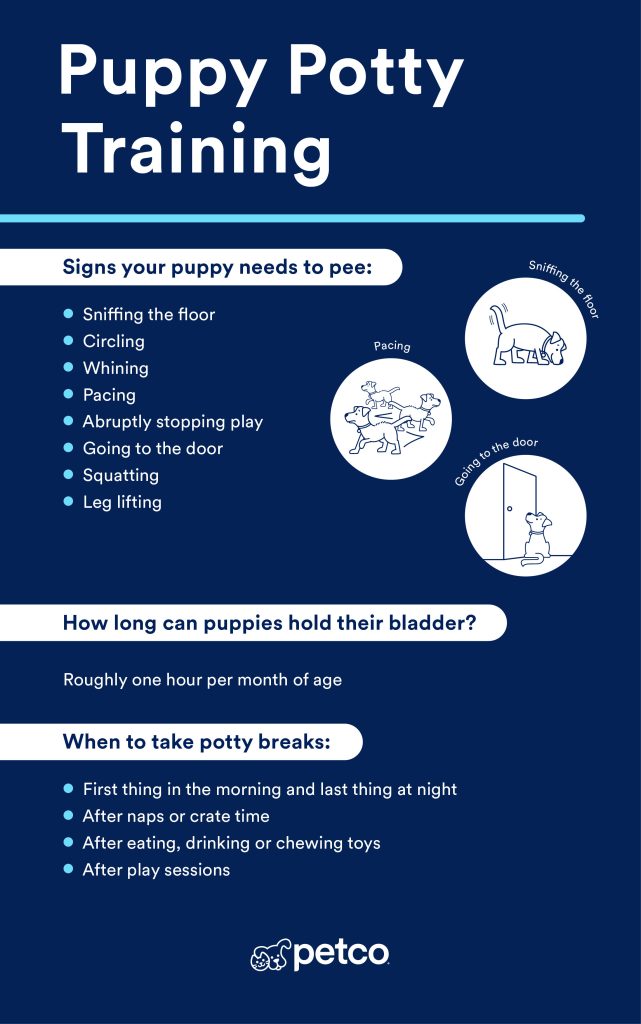
Potty training your puppy starts with knowing their signs. Puppies cannot tell you when they need to go, but they show signals.
Watching your puppy closely helps you learn these signals. This makes training easier and faster.
Common Signs Of Needing To Go
Puppies show many signs when they need to pee or poop. You can catch these signs to take them outside on time.
- Sniffing around the floor or walls
- Circling or pacing in one spot
- Whining or barking suddenly
- Going to the door or a usual bathroom spot
- Squatting or crouching slightly
- Sudden restlessness or activity change
Timing Your Response
After seeing your puppy’s signals, act quickly. Take your puppy outside right away to the potty spot.
Puppies have small bladders and need to go often. Watch them closely after eating, playing, or sleeping.
- Take your puppy outside every 30 to 60 minutes
- Go outside right after naps or meals
- Keep a consistent potty spot outdoors
- Use a calm voice to praise when they go
Positive Reinforcement Techniques
Potty training puppies can be easier with positive reinforcement. This method helps puppies learn good habits quickly.
Using rewards and kind words encourages puppies to repeat good behavior. Avoid using fear or punishment.
Treats And Praise
Give your puppy a small treat right after they go potty outside. This helps them connect the action with a reward.
Use happy voices and gentle petting to praise your puppy. This makes them feel loved and motivated.
- Use tasty treats your puppy loves
- Give treats immediately after potty
- Say “Good job!” in a cheerful tone
- Pet your puppy gently while praising
Avoiding Punishment
Do not yell or hit your puppy for accidents. This can make them scared and confused.
Instead, clean up messes quietly and redirect your puppy to the right spot. Calm actions teach better than punishment.
- Ignore accidents calmly
- Use a leash to guide outside
- Reward good potty behavior
- Stay patient and consistent
Handling Accidents Effectively
Potty training a puppy requires patience and consistency. Accidents are part of the process, but handling them properly will help your puppy learn faster.
When accidents happen, it’s essential to clean thoroughly to remove odors. This will prevent your puppy from going in the same spot again.
Cleaning Tips To Remove Odors
Cleaning up accidents quickly is crucial. Use the right products to eliminate odors effectively.
- Use an enzyme cleaner to break down the smell.
- Avoid ammonia-based cleaners; they mimic urine scent.
- Blot the area with paper towels, then clean.
Staying Patient And Calm
Patience is key when training your puppy. Staying calm helps them feel secure and learn better.
Remember, puppies need time to learn. Keep your tone positive and encouraging.
Using Crate Training
Crate training helps puppies learn where to go potty. It creates a safe space for them.
The crate teaches puppies to hold their bladder. It also stops accidents inside the house.
Benefits For Potty Training
Crate training helps puppies develop good bathroom habits. It uses their natural instincts to keep their space clean.
It also makes it easier for owners to watch their puppies. This helps catch accidents before they happen.
- Puppies learn to control their bladder
- Reduces accidents in the house
- Helps puppies feel safe and secure
- Makes potty training faster and easier
Choosing The Right Crate Size
Pick a crate that fits your puppy well. It should be big enough to stand and turn around.
Too large a crate can cause accidents inside. Too small a crate will be uncomfortable for your puppy.
- Small enough to prevent bathroom spots inside
- Large enough for comfort and movement
- Adjust size as your puppy grows
- Use dividers to change space inside the crate
Common Challenges And Solutions
Potty training a puppy can be tough. Puppies are learning and need guidance. Here are common challenges and ways to handle them.
Training takes patience and consistency. Understand these challenges to help your puppy succeed.
Nighttime Accidents
Puppies often have accidents at night. Their bladders are small, and they cannot hold it for long.
Limit water intake before bedtime. Take your puppy out for a final potty break.
- Create a bedtime routine
- Use a crate to encourage holding
- Be patient and clean accidents calmly
Regression Issues
Sometimes puppies regress in their training. Changes in routine or environment can cause this.
Stay consistent with training. Reinforce good behavior with treats and praise.
- Keep a regular schedule
- Stay calm and positive
- Address regressions immediately
Credit: pomeranian.org

Credit: medium.com
Frequently Asked Questions
How Long Does Puppy Potty Training Usually Take?
Puppy potty training typically takes 4 to 6 months. Consistency, patience, and regular routines speed up the process. Each puppy learns at its own pace, so avoid rushing or punishing mistakes.
What Are The Best Potty Training Methods For Puppies?
Use crate training, frequent outdoor breaks, and positive reinforcement. Reward your puppy immediately after they eliminate outside. Consistency and supervision prevent accidents and build good habits faster.
How Often Should I Take My Puppy Outside To Potty?
Take your puppy outside every 1 to 2 hours, especially after meals, naps, and playtime. Frequent trips reduce accidents and teach your puppy where to go.
What Are Common Potty Training Mistakes To Avoid?
Avoid punishing accidents, inconsistent schedules, and insufficient supervision. Not rewarding good behavior or rushing the process can confuse your puppy and delay training success.
Conclusion
Potty training your puppy takes time and patience. Consistency helps your puppy learn faster. Praise good behavior to encourage your puppy. Expect accidents; they are part of learning. Use simple commands and routines every day. Stay calm and positive throughout the process.
Soon, your puppy will understand where to go. Enjoy the bond you build together. Good habits start with gentle, steady training. Keep these tips in mind for success. Your puppy will thank you with a happy, clean home.

Emily Barker is the founder of ChillDogLife.com, a space dedicated to helping pup parents discover the best dog products, lifestyle tips, and cozy ideas for happier homes.
A lifelong dog lover, Emily combines her passion for pets with a knack for research to share trusted recommendations on everything from toys and furniture to health and everyday care.
Her goal is simple: to make life easier, stylish, and more joyful for dogs and the people who love them.




