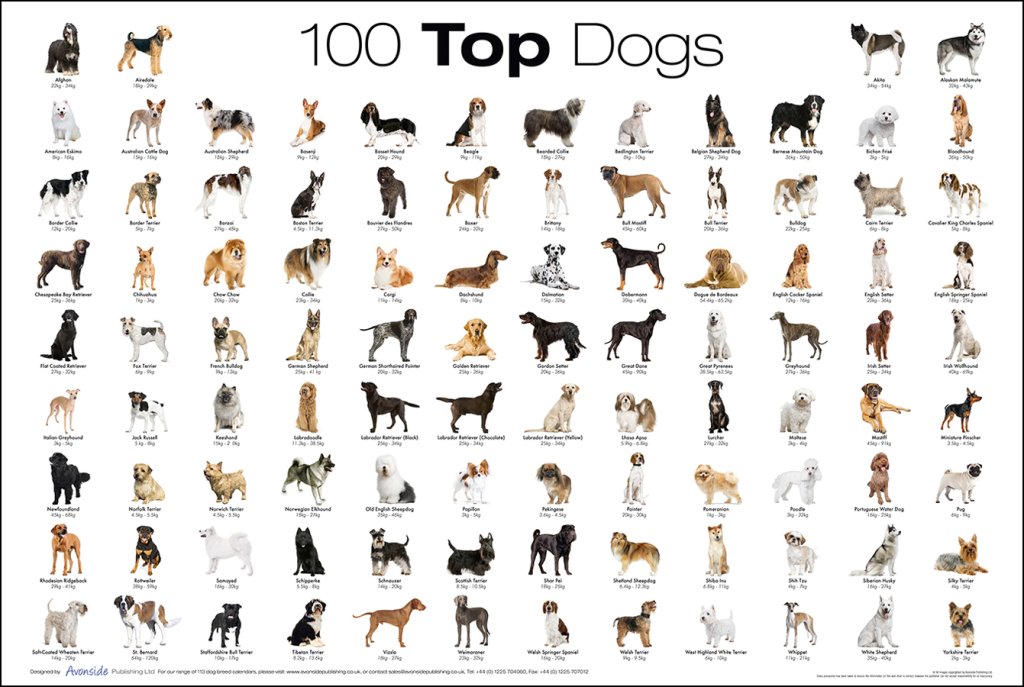
Have you ever wondered just how many dog breeds there really are? Whether you’re thinking about adding a furry friend to your family or simply curious about the amazing variety of dogs out there, knowing the number of breeds can open your eyes to a whole new world.
From tiny pups to giant protectors, each breed has its own unique traits that might just match your lifestyle perfectly. Keep reading, and you’ll discover surprising facts that could change the way you see dogs forever. Your next favorite breed might be closer than you think!
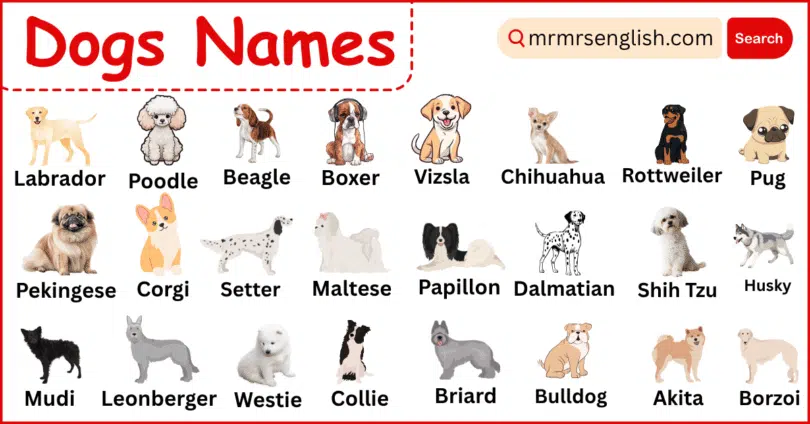
Credit: mrmrsenglish.com
Dog Breed Categories
Dogs come in many breeds. These breeds are grouped by their skills and traits. Each category shows what dogs were bred to do.
Knowing dog breed categories helps you learn more about their behavior and needs. Here are the main groups of dog breeds.
Sporting Dogs
Sporting dogs were bred to help hunters find and retrieve game. They are active and enjoy water and field work.
These dogs need lots of exercise and love being outdoors. They are friendly and good with families.
- Labrador Retriever
- Golden Retriever
- English Springer Spaniel
- Cocker Spaniel
Hound Dogs
Hound dogs were bred to track scents or chase prey by sight. They have strong noses or sharp eyesight.
These dogs can be calm or very energetic. They often have a loud bark or howl.
- Beagle
- Dachshund
- Bloodhound
- Greyhound
Working Dogs
Working dogs were bred to perform tasks like guarding, pulling sleds, or rescue work. They are strong and smart.
These dogs need jobs to stay happy. They often protect their families well.
- Siberian Husky
- Boxer
- Great Dane
- Rottweiler
Terriers
Terriers were bred to hunt small animals and pests. They are lively and brave dogs.
Terriers often have a lot of energy and need exercise. They enjoy digging and playing.
- Jack Russell Terrier
- Scottish Terrier
- Border Terrier
- West Highland White Terrier
Toy Dogs
Toy dogs were bred to be small companions. They are perfect for people who want a lap dog.
These dogs need less exercise but enjoy playtime. They are great for apartments and small homes.
- Chihuahua
- Pomeranian
- Yorkshire Terrier
- Pug
Non-sporting Dogs
Non-sporting dogs are a diverse group. They do not fit well in other categories but are popular pets.
This group includes dogs with different sizes, coats, and personalities. Many are friendly and calm.
- Dalmatians
- Bulldogs
- Poodles
- Bichon Frise
Herding Dogs
Herding dogs were bred to help control livestock. They are smart and quick learners.
These dogs need mental and physical activity. They often bond closely with their owners.
- Border Collie
- German Shepherd
- Australian Shepherd
- Belgian Malinois
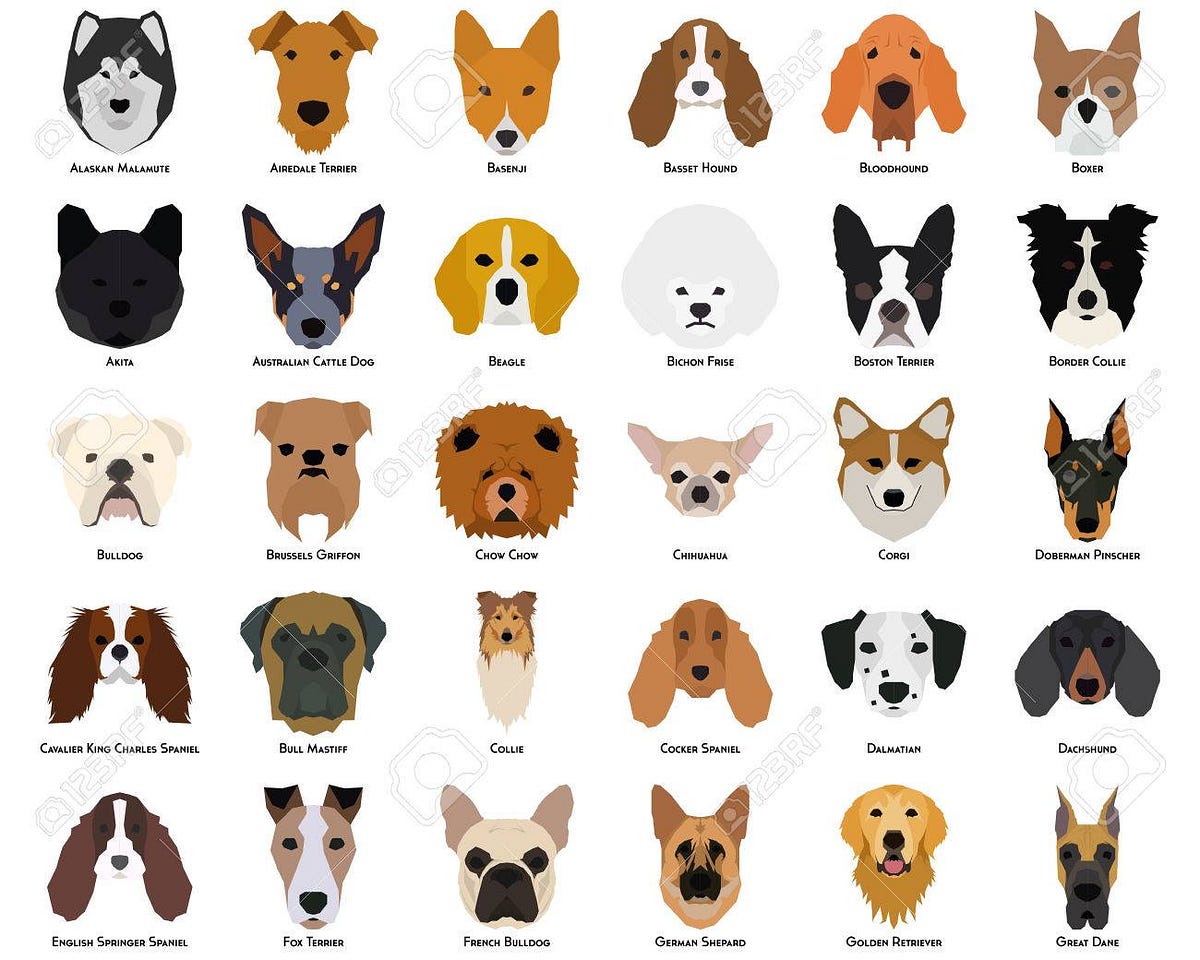
Credit: medium.com
Popular Dog Breeds Worldwide
Dogs come in many breeds, each with unique traits and looks. People choose dogs based on their size, personality, and needs.
Some breeds are famous around the world for their friendly nature and intelligence. Here are five popular dog breeds.
Labrador Retriever
The Labrador Retriever is a friendly and active dog. It is great with families and loves to play outside.
German Shepherd
German Shepherds are smart and brave. They work well as police dogs and helpers for people with disabilities.
Golden Retriever
Golden Retrievers are gentle and loyal. They enjoy being part of the family and are good with children.
Bulldog
Bulldogs have a strong build and a calm nature. They are good indoor dogs and like short walks.
| Breed | Size | Temperament | Origin |
|---|---|---|---|
| Labrador Retriever | Medium to Large | Friendly, Active | Canada |
| German Shepherd | Large | Intelligent, Brave | Germany |
| Golden Retriever | Medium to Large | Loyal, Gentle | Scotland |
| Bulldog | Medium | Calm, Stubborn | England |
| Beagle | Small to Medium | Curious, Friendly | England |
Beagle
Beagles are small dogs with a strong sense of smell. They are curious and love to explore their surroundings.
- Great with kids
- Needs daily exercise
- Good hunting companions
- Friendly and social
Rare And Exotic Breeds
There are many dog breeds in the world. Some breeds are rare and exotic. These dogs often come from unique places.
Rare breeds can have special looks and traits. They are not common pets but are loved by some people.
Azawakh
The Azawakh is a tall, slim dog from West Africa. It was bred to hunt and guard. This breed is very fast and graceful.
Azawakhs have short coats and come in many colors. They are loyal but can be shy with strangers.
Mudi
The Mudi is a Hungarian herding dog. It has curly fur and a lively personality. This breed is smart and easy to train.
Mudis are good at work and play. They enjoy running and learning new tasks. They are rare outside of Hungary.
Lagotto Romagnolo
The Lagotto Romagnolo comes from Italy. It is known for its curly coat and strong nose. This dog is a truffle hunter.
Lagottos are friendly and love water. They make great family pets but need regular grooming.
Thai Ridgeback
The Thai Ridgeback is an ancient breed from Thailand. It has a unique ridge of hair along its back. This dog is strong and alert.
Thai Ridgebacks are independent and protective. They need early training and socialization to be good pets.
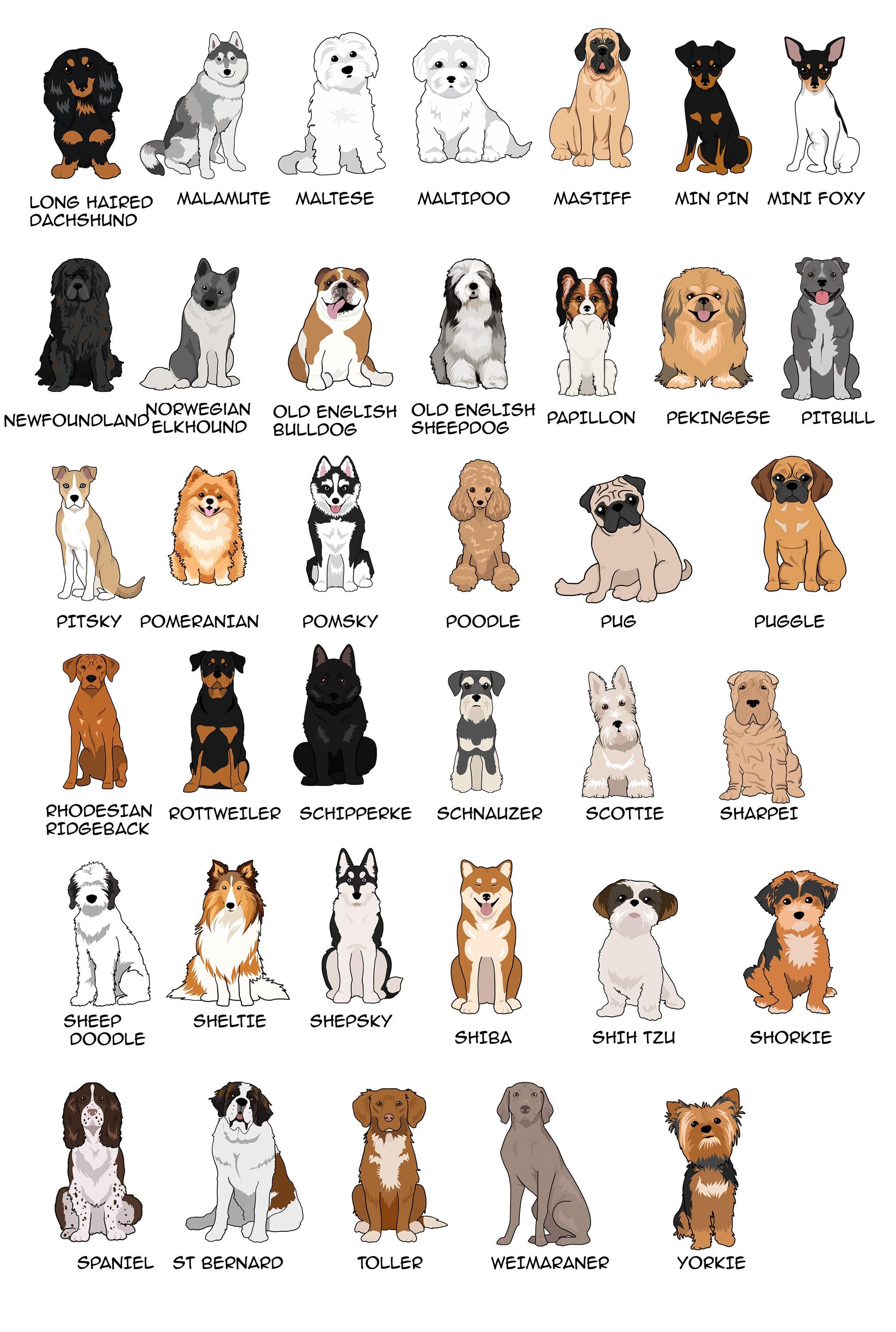
Credit: www.etsy.com
Mixed Breeds And Designer Dogs
There are many dog breeds worldwide, including purebreds and mixed breeds. Mixed breeds are dogs with parents from different breeds.
Designer dogs are a type of mixed breed. They are created by crossing two purebred dogs to combine traits.
Labradoodle
The Labradoodle is a mix of a Labrador Retriever and a Poodle. It is known for being friendly and smart.
Cockapoo
Cockapoos come from crossing a Cocker Spaniel with a Poodle. They are small and good with families.
Puggle
The Puggle is a mix between a Pug and a Beagle. This dog has a playful nature and a strong sense of smell.
- Friendly and social
- Medium size
- Short coat
- Needs regular exercise
Maltipoo
Maltipoos are crosses between Maltese and Poodles. They are small and often have curly fur.
| Breed | Parent 1 | Parent 2 | Size |
| Labradoodle | Labrador Retriever | Poodle | Medium to Large |
| Cockapoo | Cocker Spaniel | Poodle | Small to Medium |
| Puggle | Pug | Beagle | Small to Medium |
| Maltipoo | Maltese | Poodle | Small |
Breed Recognition Organizations
Many groups recognize dog breeds worldwide. They set standards for each breed. These standards help keep breed qualities clear.
Each organization lists the breeds they accept. The total number of dog breeds varies by group. Here are some main breed recognition organizations.
American Kennel Club
The American Kennel Club (AKC) is one of the largest in the United States. It recognizes over 190 dog breeds. The AKC divides breeds into groups based on their work or origin.
- Sporting Group
- Hound Group
- Working Group
- Terrier Group
- Toy Group
- Non-Sporting Group
- Herding Group
United Kennel Club
The United Kennel Club (UKC) also registers many breeds. It focuses on dogs’ abilities and working skills. The UKC recognizes more than 300 breeds.
They group dogs by function, such as hunting or guarding. This approach highlights the dog’s original purpose.
Fédération Cynologique Internationale
The Fédération Cynologique Internationale (FCI) is the world’s largest dog breed federation. It includes members from over 90 countries. The FCI recognizes about 360 breeds.
| Group | Description |
| Group 1 | Sheepdogs and Cattledogs |
| Group 2 | Pinscher and Schnauzer – Molossoid breeds |
| Group 3 | Terriers |
| Group 4 | Dachshunds |
| Group 5 | Spitz and Primitive types |
| Group 6 | Hounds |
| Group 7 | Pointing Dogs |
| Group 8 | Retrievers – Flushing Dogs |
| Group 9 | Companion and Toy Dogs |
| Group 10 | Sighthounds |
The Kennel Club (uk)
The Kennel Club in the United Kingdom is one of the oldest breed organizations. It recognizes about 220 breeds. It also helps with dog shows and trials.
The Kennel Club groups breeds into these main categories:
- Gundog
- Hound
- Pastoral
- Terrier
- Toy
- Utility
- Working
Factors Influencing Breed Numbers
There are many breeds of dogs, each with unique traits. The number of breeds is influenced by several factors.
These factors include geographic variations, historical development, and breed standards. Each plays a role in the diversity of dog breeds.
Geographic Variations
Different regions have different breeds. Climate and terrain affect which breeds thrive.
- Cold regions favor thick-coated breeds
- Deserts have breeds with short coats
- Mountains host strong and agile breeds
Historical Development
History shapes dog breeds. People bred dogs for specific tasks.
| Task | Breed Example |
| Herding | Border Collie |
| Hunting | Beagle |
| Guarding | German Shepherd |
Breed Standards
Breed standards define what makes a breed unique. These standards are set by dog organizations.
Choosing The Right Breed
There are over 340 dog breeds worldwide. Each breed has unique traits. Choosing the right breed is important. It should fit your lifestyle and home. Consider several factors before making your choice.
Lifestyle Compatibility
Your lifestyle influences the breed you should choose. Active people might prefer energetic dogs. Couch potatoes should consider calmer breeds. Think about your daily routine and how a dog fits in.
- Active lifestyle: Border Collie, Labrador Retriever
- Quiet homebody: French Bulldog, Shih Tzu
- Frequent traveler: Chihuahua, Dachshund
Size And Energy Levels
Size matters when choosing a dog. Large dogs need more space. Small dogs fit better in apartments. Energy levels vary by breed too. High-energy dogs need more exercise. Low-energy dogs are more relaxed.
- Small and calm: Bichon Frise, Pug
- Large and energetic: German Shepherd, Golden Retriever
- Medium and balanced: Beagle, Bulldog
Grooming Needs
Consider grooming when picking a breed. Some dogs need regular grooming. Others are low-maintenance. Long-haired breeds require more care. Short-haired dogs are easier to manage.
- Low maintenance: Boxer, Dalmatian
- Moderate grooming: Cocker Spaniel, Poodle
- High grooming: Afghan Hound, Maltese
Frequently Asked Questions
How Many Dog Breeds Exist Worldwide?
There are approximately 340 recognized dog breeds globally. Different kennel clubs may list varying numbers based on standards. New breeds continue to be developed through selective breeding and genetic research.
Which Organization Classifies Dog Breeds Officially?
The Fédération Cynologique Internationale (FCI) is the largest international dog breed organization. It recognizes around 340 breeds. Other groups like the AKC and UKC also classify breeds regionally.
What Factors Define A Dog Breed?
A dog breed is defined by specific traits like size, coat, temperament, and purpose. These traits are consistently passed through generations. Breeding standards ensure uniformity within each breed.
Are Mixed Breed Dogs Considered Separate Breeds?
No, mixed breed dogs result from crossbreeding two or more breeds. They don’t have official breed standards. Mixed breeds often exhibit diverse traits from their parent breeds.
Conclusion
Dogs come in many shapes, sizes, and breeds. Each breed has its own traits and history. Knowing the number of breeds helps us appreciate their diversity. Whether big or small, dogs bring joy to many lives. Choosing the right breed means matching personality and needs.
Dogs remain loyal friends and loving companions. Exploring dog breeds can be fun and educational. Every breed tells a unique story worth learning.

Emily Barker is the founder of ChillDogLife.com, a space dedicated to helping pup parents discover the best dog products, lifestyle tips, and cozy ideas for happier homes.
A lifelong dog lover, Emily combines her passion for pets with a knack for research to share trusted recommendations on everything from toys and furniture to health and everyday care.
Her goal is simple: to make life easier, stylish, and more joyful for dogs and the people who love them.




